 The so-called "Eight Scenic Spots of Shanghai" in the Ming Dynasty were first mentioned in the official Shanghai County Chronicle, edited during the Wanli period. It was recorded by Li Xingnan, a Shanghai resident during the Qianlong period of the Qing Dynasty, in his poem "Shenjiang Bamboo Branch". Longhua Night Bell, Sunrise between the sky and the sea, Huangpu Autumn Waves, Wusong Misty Rain, Shiliang Night Moon, Wild Reed, Distant View on Phoenix Tower, and Snow after Rain. Some of these scenic spots no longer exist due to environmental changes, while some are only remnants. The best-preserved one is the "Longhua Night Bell".
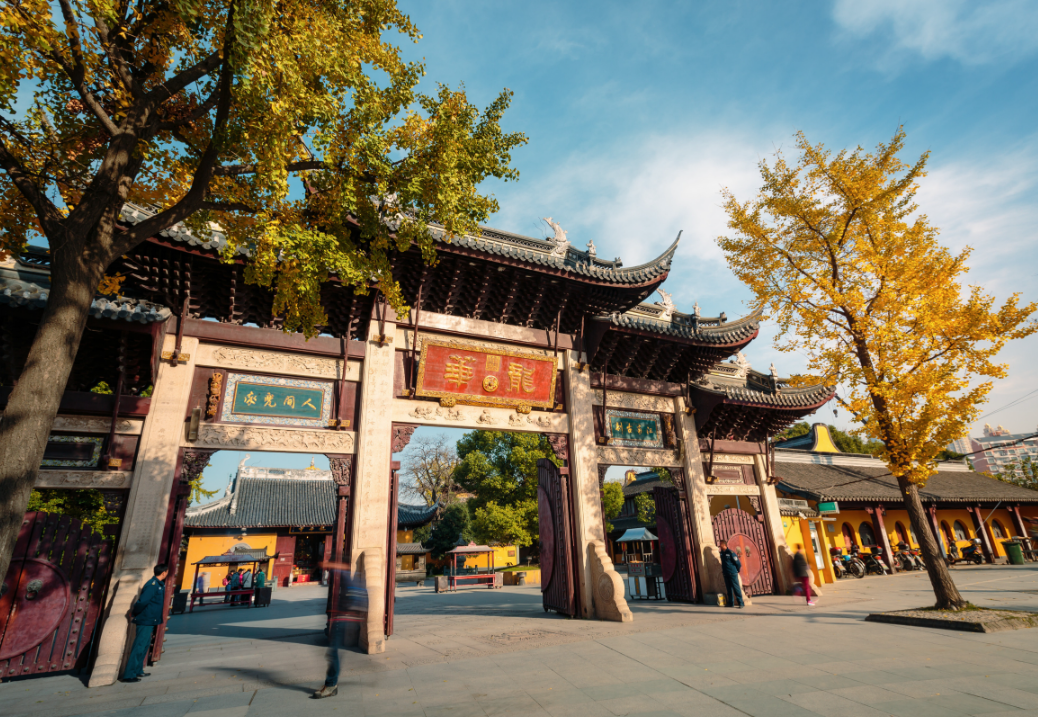
Along with Hangzhou's "Nanping Night Bell" and Suzhou's "Hanshan Temple Night Bell," the "Longhua Night Bell" resounds in the water towns of Jiangnan. The location where the "Longhua Night Bell" took place is the famous Longhua Temple in Shanghai. Longhua Temple, named after the story in Buddhist scriptures where the Maitreya Bodhisattva achieved enlightenment under a Longhua tree, is also known as Kongxiang Temple. It is located in Xuhui District, Shanghai, and is not only one of the most ancient temples in Shanghai but also one of the well-known temples in Jiangnan that has existed for thousands of years. It was built between the 3rd and 7th centuries AD, destroyed during the Tang Dynasty due to war, and rebuilt by Qianhongchu of Wuyue in the second year of the Song Dynasty's Taiping Xingguo. It was then renamed "Kongxiang Temple". It was destroyed again during the transition between the Song and Yuan Dynasties due to military disasters and was rebuilt during the Yongle period of the Ming Dynasty, and then renamed "Longhua Temple".
The main halls arranged along the central axis of the temple are all palace-style buildings, showing obvious aesthetic features of traditional Han architecture and national style. The Maitreya Hall, with its eaves and upturned corners, harmoniously combines stability and dynamism. The Great Hall of the Great Buddha is the main building of Longhua Temple. It is a double-eave hip-and-gable roof style. With the support of the platform's terrain and the surrounding buildings, it gives people a magnificent and soaring beauty.
Every year around the 15th day of the third lunar month, Longhua Temple holds a temple fair, attracting a large number of pilgrims from far and near. There is a saying that goes, "In the good spring scenery on the 15th day of the third lunar month, many people gather at the ancient Zen temple. The sound of the bell carries the waves, as boats pass through the eighteen bays of Longhua." The origin of the Longhua Temple Fair can be traced back to the Tang Dynasty. In the Ming Dynasty, the fair developed from a simple religious event to a comprehensive fair that included commerce and entertainment. In the late Qing Dynasty, Longhua Temple gained great fame because of its peach blossoms. The combination of flower appreciation and temple fair activities expanded the scale and influence of the fair, making it one of the most famous temple fairs in East China. In 2008, the Shanghai Longhua Temple Fair was included in the national intangible cultural heritage list.



















 2026-05-28