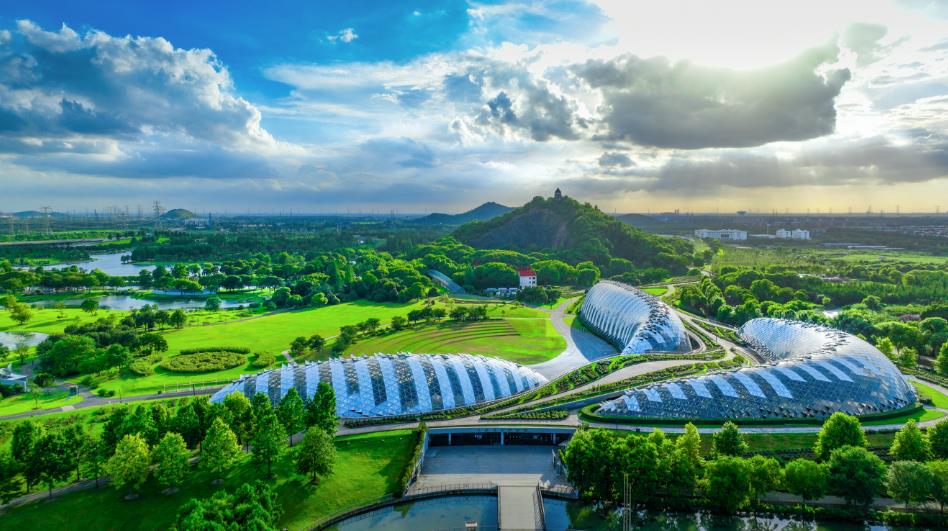
Chenshan Botanical Garden covers an area of 207 hectares and is one of the largest botanical gardens in China. It is home to plants from around the world, distributed in various themed areas such as the native plants zone, tropical greenhouse, medicinal plant garden, etc., showcasing the natural diversity from different regions. Visitors can find Japanese cherry blossoms, African cycads, Australian eucalyptus trees, as well as rare Chinese plants like the dawn redwood and ginkgo biloba, each with its own traditional origins and stories.
The iconic building of the botanical garden is the Chenshan Greenhouse, known as the "giant glass flower house," which is one of the largest monolithic greenhouses in Asia. This architectural marvel combines art and engineering: the streamlined roof resembles an unfurled leaf, while the interior showcases the ecological landscapes of tropical rainforests, arid deserts, and wetland plants. Strolling through the greenhouse feels like traveling through South American jungles and African deserts, truly appreciating the unique beauty of plants from around the world. The botanical garden also regularly hosts various nature-related festivals and events, such as the Chenshan Grassland Music Festival, Nature Life Festival, flower exhibitions, and gardening workshops. These activities not only engage visitors but also convey horticultural knowledge and the concept of nature conservation through interactive means.
After a period of rapid growth, Chenshan Botanical Garden has become a prominent symbol of Shanghai, serving as a cultural hub for public understanding of plants and close interaction with nature, with an annual visitor count exceeding one million. As a supporter of urban ecological construction technology, Chenshan Botanical Garden is increasingly involved in international affairs, serving national strategies and local needs, contributing to the "Belt and Road" initiative and the construction of Shanghai's scientific and technological innovation center. It conducts research on the collection, protection, and sustainable utilization of regional strategic plant resources, aiming to become a globally renowned botanical research center and a base for science popularization and education, as well as a highland for horticultural talent development in Asia.



















 2026-05-28