Southeast Asian food is the most precisely calibrated cuisine on earth — not complex in the French sense, with technique and stocks reducing for six hours, but complex in that every dish is a live negotiation between five or six opposing forces, and if any one dominates, the whole thing falls apart.
Thailand: everything at once
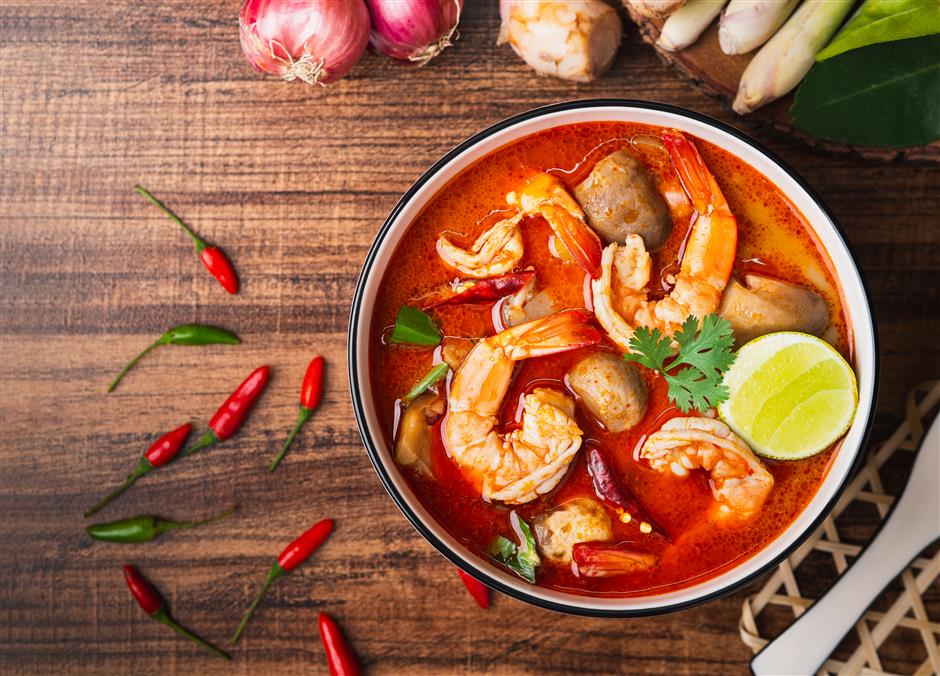
Thai food makes this most explicit. A bowl of tom kha gai (coconut milk soup with chicken, galangal and lemongrass) is simultaneously hot from bird’s eye chili, sour from lime, salty from fish sauce and sweet from palm sugar, and the galangal adds something that doesn’t fit neatly into any of those categories: a cool, piney depth that grounds the rest. Take any one element out and the dish doesn’t just lose something; it becomes a different dish entirely.
The range is considerable. Som tam (green papaya salad: shredded unripe papaya pounded in a mortar with fish sauce, lime, palm sugar and dried shrimp) sits as far from a green curry as you can get while remaining Thai, and yet the same tension between sweet, sour, salty and hot runs through both. Pad thai, maligned by overexposure and a thousand airport approximations, is still a serious piece of cooking when done right: rice noodles stir-fried with egg, tofu or shrimp, tamarind, fish sauce and finished with crushed peanuts and a wedge of lime at the table. The cuisine doesn’t waver. Every dish pushes hard on every front at once.
Vietnam: ground-up brightness
Vietnamese cooking operates on the same fundamental tensions but reaches them through a different architecture. The fish sauce is still there (it is always there; if Southeast Asian cuisine has a spine, fish sauce is it), but it works in the background, integrated into the broth and the dressing rather than being punchy.
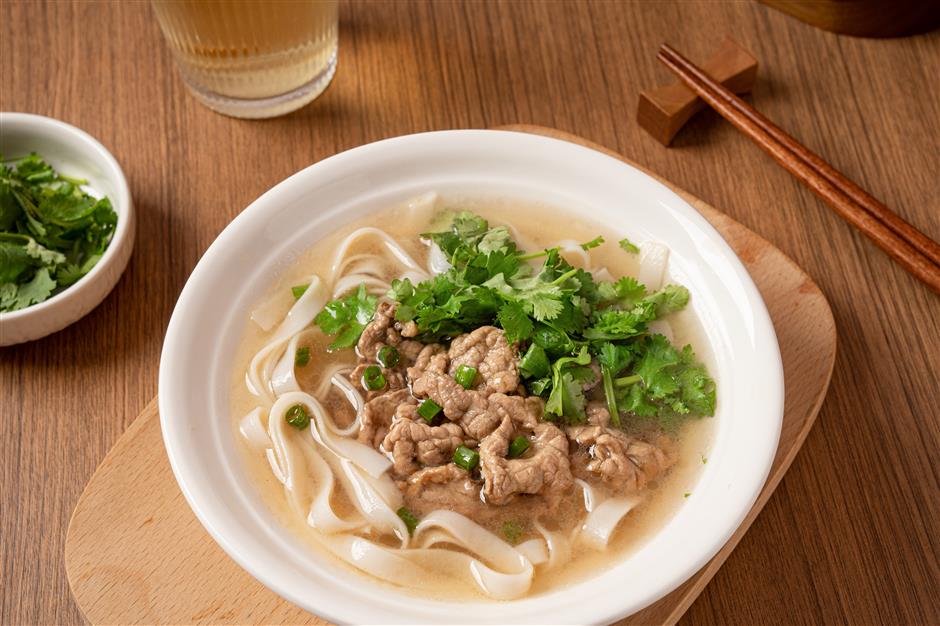
Pho (the Vietnamese national dish: a long-simmered clear beef bone broth served over rice noodles with thin slices of beef, and a plate of fresh herbs alongside) looks gentle and isn’t. The depth comes from hours of bones with charred ginger and onion, star anise, cinnamon. The heat comes from the table: fresh chili and hoisin applied by whoever is eating. The herbs (mint, Thai basil, bean sprouts, cilantro) aren’t garnish. They are half the dish. Bun bo Hue (a sharper, richer noodle soup from the central city of Hue, built on lemongrass and shrimp paste) is more assertive than pho but still arrives with that same mountain of fresh herbs alongside. The banh mi (a Vietnamese sandwich on a crackling French baguette, loaded with pork, pâté, pickled daikon and carrot, fresh cucumber and cilantro, and chili sauce) is one of the great sandwiches anywhere: light and rich at the same time, which is a hard thing to be. The French left the bread; the Vietnamese turned it into something better.
Malaysia: 3 traditions, 1 table
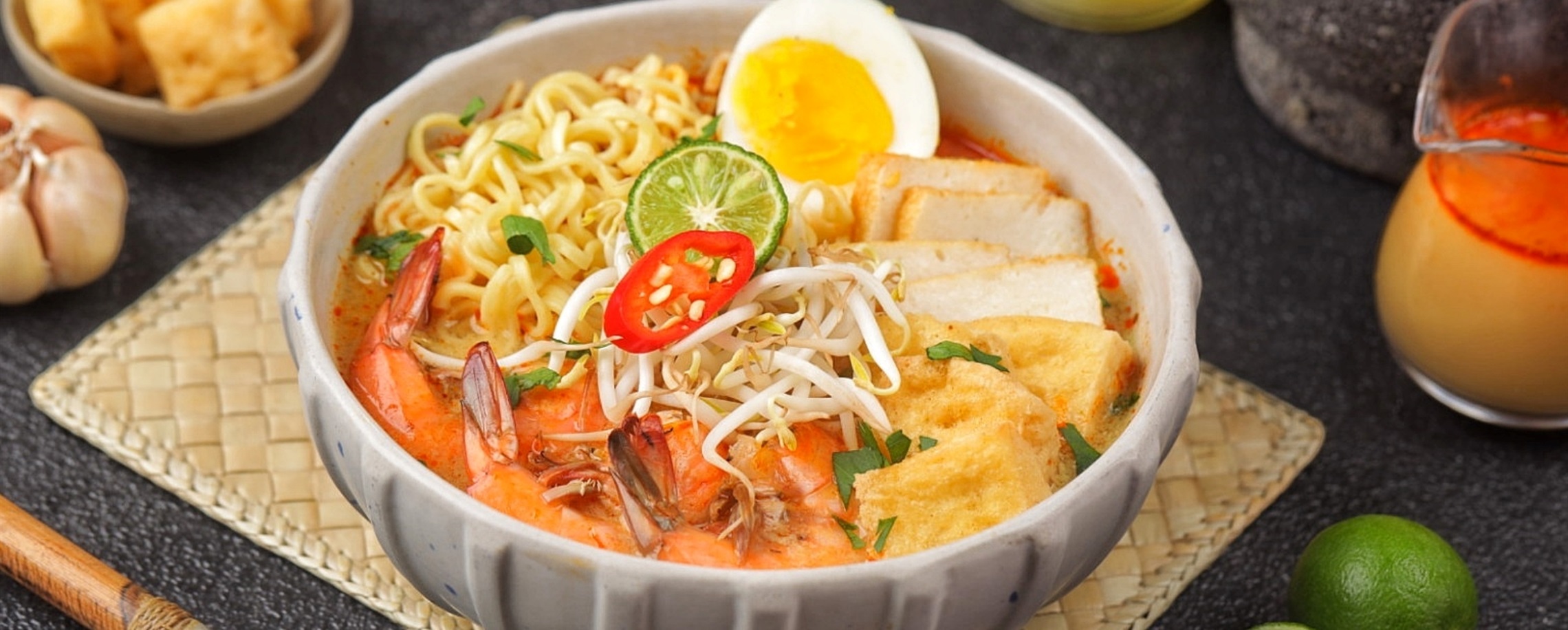
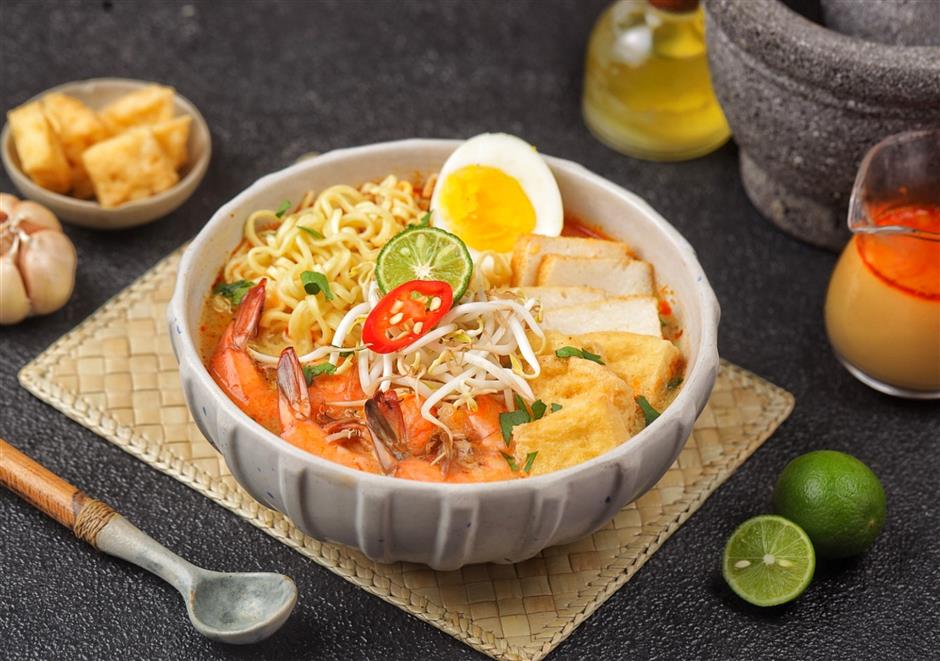
Malaysia sits at the confluence of Malay, Chinese and Indian culinary traditions, and its cooking carries all three with specificity rather than compromise. Laksa (a spiced noodle soup built on coconut milk and shrimp paste) differs so dramatically between the Penang version (sour, tamarind-forward, heavy on mackerel) and the Kuala Lumpur version (rich, coconut milk-based, packed with prawns) that calling them the same dish requires generosity. Rendang (a slow-cooked dry curry of beef or chicken that spends hours absorbing toasted coconut and layered spice paste until almost no liquid remains) is one of the most patiently constructed dishes in any tradition. Nasi lemak (rice steamed in coconut milk with pandan leaf, served with sambal chili paste, fried anchovies, roasted peanuts, cucumber and a hard-boiled egg) is breakfast in Kuala Lumpur and has been for generations.
The Indian influence arrives in the roti canai (a flaky, layered flatbread cooked on a griddle and served with dal or curry for dipping), the mamak stalls (Indian-Muslim street cooking that has become as Malaysian as anything else), and the layered spicing that runs through much of the cuisine. The Chinese influence shows in the wok-fried noodle dishes, the soy-braised meats, the hawker center format itself. None of this is diluted. It has all been absorbed and made into something new.
Indonesia: spice at the source
Indonesia’s claim on the Southeast Asian flavor conversation is older than the conversation itself: the Spice Islands were the reason European powers drew their trade routes, fought their wars and drew their colonial maps. The cuisine that emerged from that geography is accordingly deep, varied across 17,000 islands, and held together by a few consistent principles.
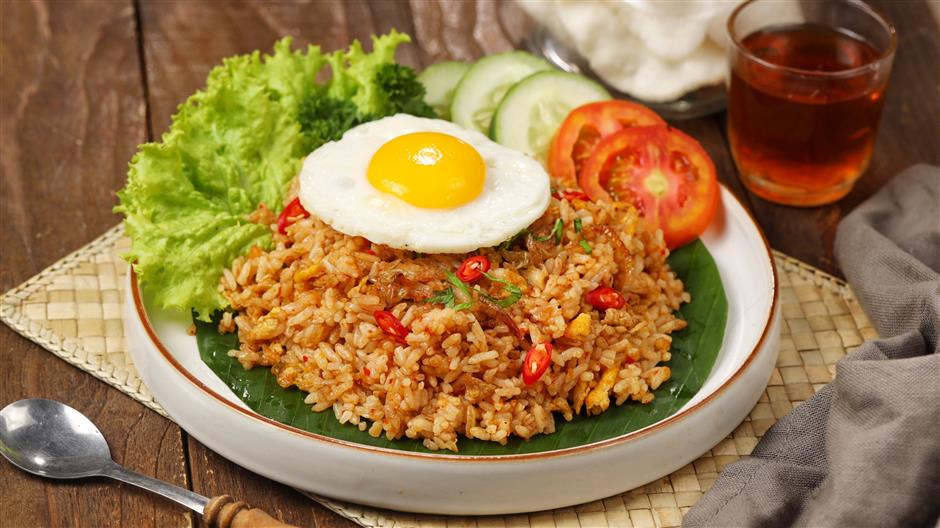
Nasi goreng (fried rice seasoned with kecap manis, a thick sweet soy sauce, shallots, garlic, chili and usually topped with a fried egg and prawn crackers) is the everyday reference point, the dish that every Indonesian grew up eating in some version. Gado-gado (a salad of blanched and raw vegetables, tofu, tempeh and hard-boiled egg dressed in a peanut sauce that is sweet, savory and faintly sour all at once) is a complete meal. Soto ayam (a clear, turmeric-yellow chicken broth fragrant with lemongrass, galangal and kaffir lime leaf, served over rice or noodles with fried shallots and sambal on the side) is comfort food of serious architectural complexity. And the sambal tradition (chili-based condiments and sauces, of which there are dozens of distinct regional varieties) runs through Indonesian cooking the way soy sauce runs through Chinese cooking.
On the ground in Shanghai
Shanghai has become, over the past two decades, one of the better cities outside Southeast Asia to eat Southeast Asian food seriously.
Thai restaurants are the most plentiful and the most variable. The good ones are genuinely good, concentrated in Xuhui and Jing’an districts. The test worth applying isn’t whether pad thai is on the menu but whether the som tam arrives with enough fish sauce funk and dried shrimp to be worth eating.
Vietnamese options have settled into a reliable middle tier. Banh mi, specifically, is having a moment with several places springing up.
Malaysian and Indonesian are both genuinely rare, which is a shame for people who know what they’re missing. Despite this, Shanghai has excellent options, including hidden, out of the way Indonesian spots owned by Indonesians. Laksa appears on menus, and nasi goreng shows up in enough pan-Asian spots to be findable, but the real depth of either cuisine (the rempah-based curries, the sambal variety, the proper rendang) is not something the city has cracked at scale. When you find it done right, it’s worth the detour.



















 2026-05-29