Imaginechina
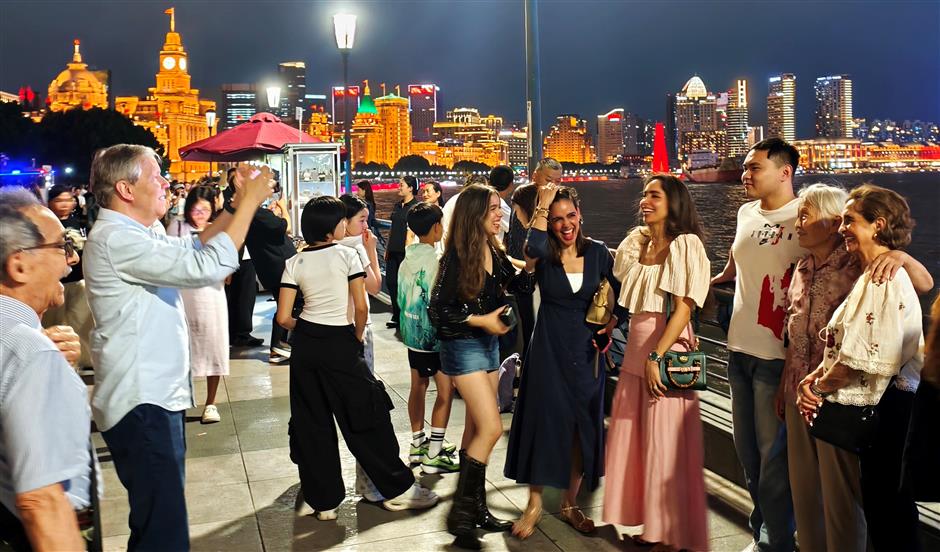
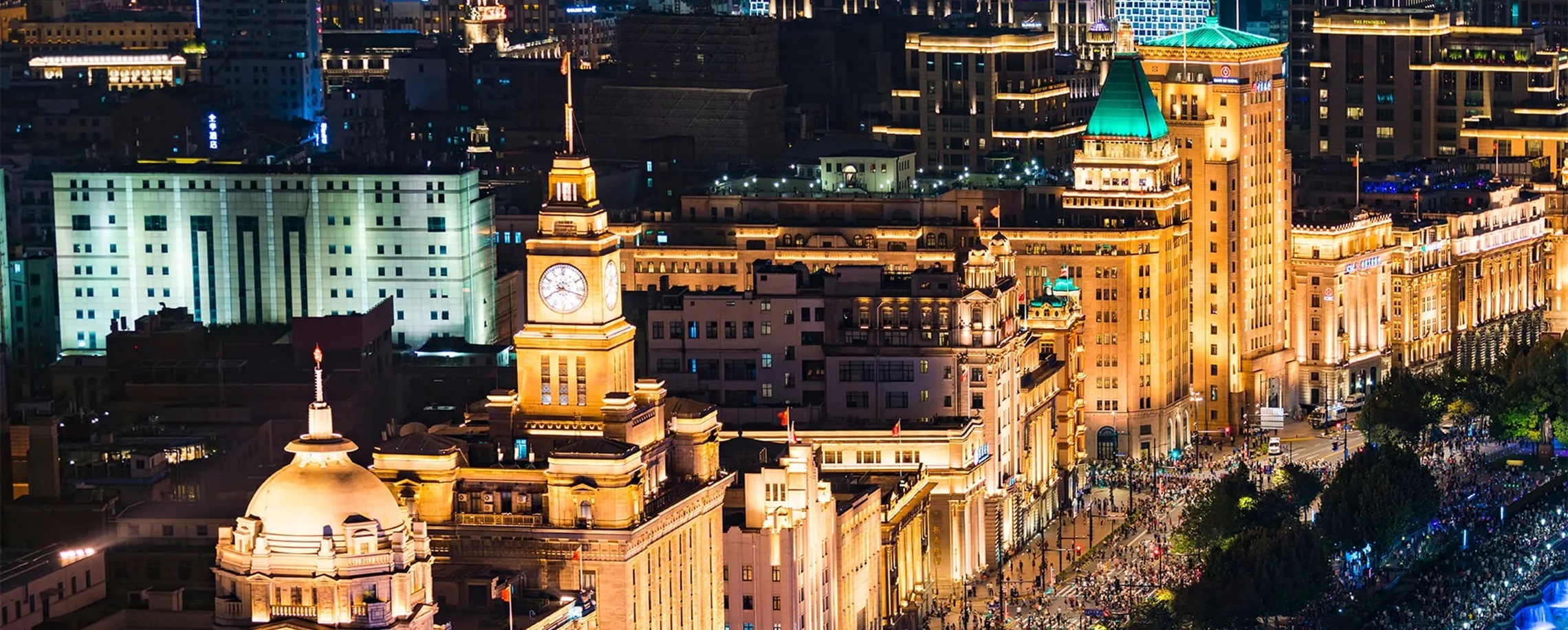
Visitors enjoy night views at the Bund waterfront of the illuminated Pudong skyline.
Fuxing Park has anchored a corner of downtown Shanghai for more than a century, but these days its biggest crowds show up after dark.
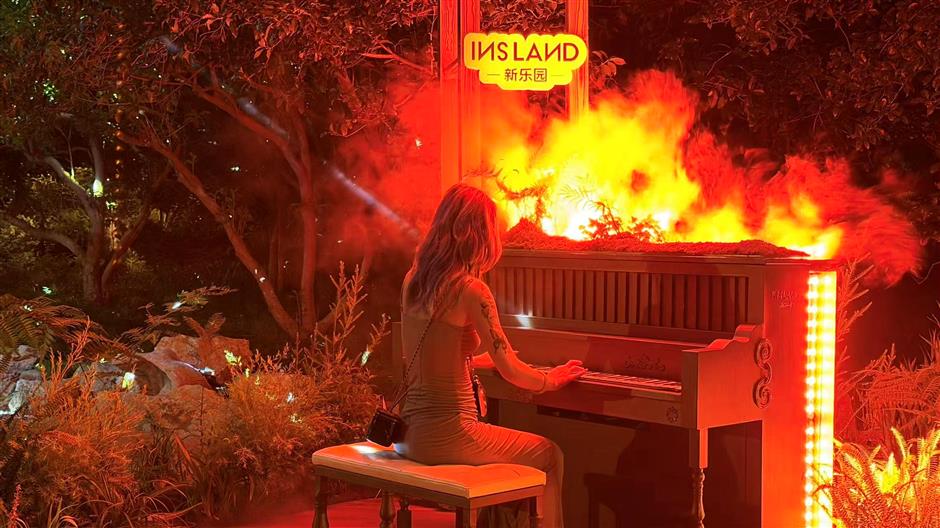
A piano installation staged to look like it is ablaze – flame effects licking up around the keys as a musician plays, framed under a sculptural, spinner-like canopy strung with lights.
One of the city's most photographed nighttime backdrops, it draws lines of visitors looking for the perfect photo to post online.
Inside the park, INS Land, an immersive entertainment complex, has become a bellwether for Shanghai's broader push into nighttime experiences.
The venue has drawn 4.8 million visitors over three years, with 2.7 million coming in 2025 alone, an 81 percent jump from a year earlier. Monthly visits already topped 240,000 earlier this year.
Overseas visitor spending at the site more than tripled in the first half of 2026. Foreign tourists now account for a fifth of all visits, one of the highest shares of any attraction in China.
"We went out every night. We went to the INS club – we thoroughly enjoyed it. So far, it's been a blast," said Jan-Philipp Kunisch from Germany.
"International visitors put us on their Shanghai itinerary themselves. They search where to go in Shanghai at night on social media, and they find us here," said Xia Tianyi, manager of INS Land.
Ti Gong
A pianist plays a flame-lit piano at Fuxing Park's INS Land.
Shanghai's push into nighttime commerce began in April 2019, when the city's commerce commission and eight other government departments issued guidelines defining "night economy" as legal business activity between 7pm and 6am.
Part of the thinking was economic necessity: With white-collar staff working longer hours, the evening had become one of the only windows left for spending and socializing.
Huangpu District, which is home to the Bund and Xintiandi, was the first in Shanghai to appoint a "night mayor," a district official responsible for streamlining regulations for after-dark businesses.
A roster of "nightlife CEOs" were also drawn from local companies to advise on what evening visitors actually want, an idea borrowed from London and New York. The model has since spread citywide.
Nighttime tourism spending across Shanghai totaled 119.4 billion yuan (US$17.7 billion) in the first half of 2026.
New after-dark destinations such as the bar-lined Hengshan Road and the Blackstone M+ music block pulled crowds beyond the old downtown core.
The broader tourism market grew alongside it: The city logged 313 million visitor trips in the same six months, up 17.6 percent from a year earlier.
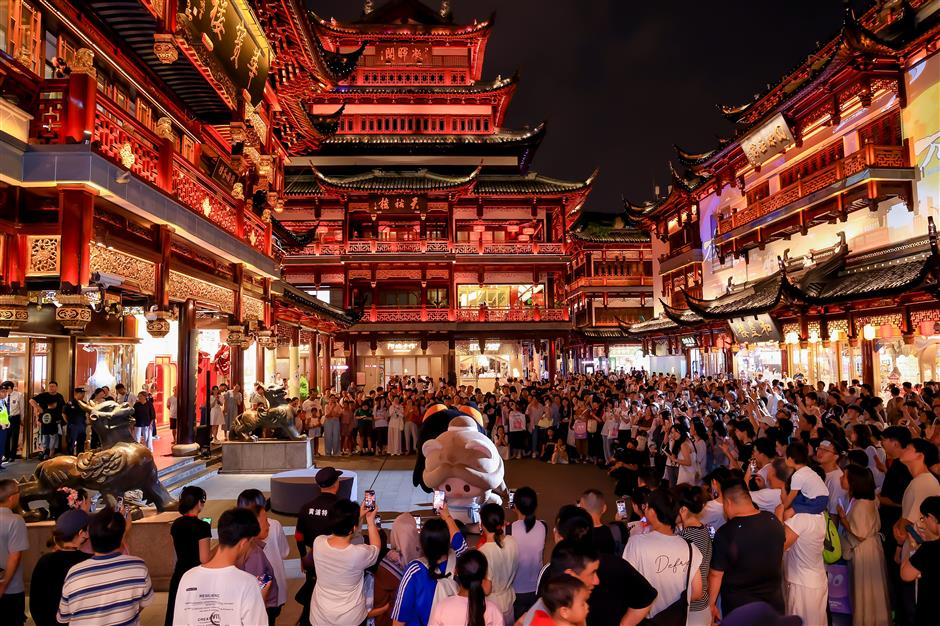
Ti Gong
Tourists pack the brightly lit lanes of Yuyuan Garden Malls during the "Fantastic Summer Nights" program.
Inbound tourism led the way, with 5.31 million overseas visitors arriving in the first half of the year, up 27.8 percent, including 5.02 million who stayed overnight, up 31.2 percent.
Visitors from South Korea, Russia, the United States, Thailand and Malaysia topped the list of arrivals. The arrivals from Russia surged 132 percent, the fastest growth of any market, according to Shanghai Culture and Tourism Administration.
Ariel Palitz, founding director of the Office of Nightlife of New York, visited Shanghai this summer for an industry exchange. She noticed how organized the approach is.
"In New York, it happens organically. It's not really set up as a festival or a program," she said. "The way you've done it here, in this organized fashion, is exciting."
Michael Kill, chief executive of the UK's Night Time Industries Association, said Shanghai's nightlife remains under the radar for many overseas visitors despite its scale.
"There are pockets of the world that still don't know how amazing Shanghai is," he said.
The Yuyuan Garden Malls exemplify this strategy perfectly, featuring a maze of upturned eaves and stone bridges that have anchored Shanghai's old walled city for generations.
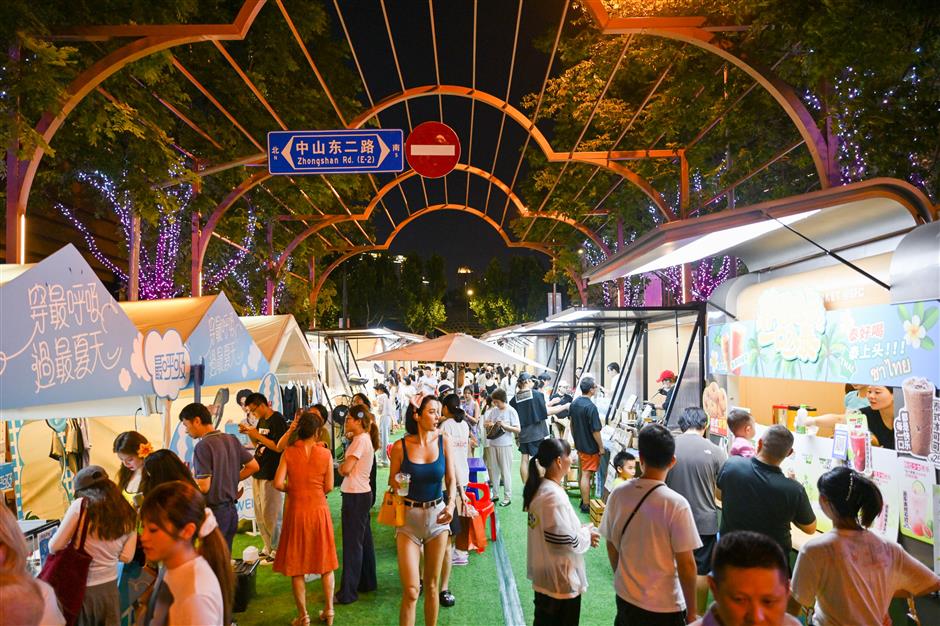
Ti Gong
Visitors explore outdoor market stalls near the Bund.
This summer, the malls and the nearby BFC Bund Finance Center are running a joint "Fantastic Summer Nights" program.
The old bazaar and the glass-and-steel Bund Tower are connected by light shows, an animation-themed night tour, and a Thai water-splashing festival over two weekends in late July and early August.
Weekend night traffic at Yuyuan has climbed more than 17 percent since the program began, while BFC has posted a year-on-year jump of over 20 percent. Century-old restaurants, including the Mid-Lake Pavilion Teahouse near the Zigzag Bridge and the Lubolang Restaurant, have added evening menus.
Dozens of shops along the nearby Nanjing Road pedestrian street have pushed closing times toward midnight or later.
An Italian food-and-wine festival will open on August 7 in Xintiandi, the shopping district created from renovated shikumen (stone-gate) row houses, turning the lanes into a market for more than 150 imported wines.
At INS Land, one ticket covers the whole night. Visitors can enjoy everything in the park without paying for each activity separately. Nearly three-quarters of all tickets sold are now this kind of pass.
The mix of visitors has surprised even Xia. Last week, the venue hosted a birthday party for a 75-year-old man and his wife.
"Nightlife shouldn't belong to just one type of person," Xia said.
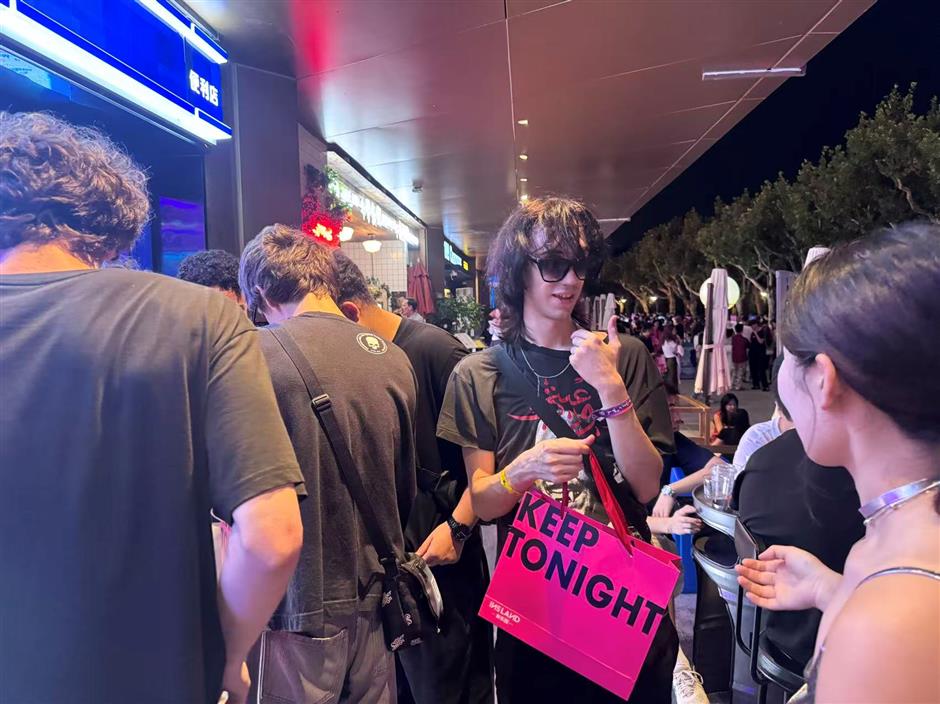
Ti Gong
Young partygoers gather outside INS Land in Fuxing Park.


















 2026-08-06