Shot by Jiang Xiaowei. Reported by Wan Lixin. Subtitles by Jiang Xiaowei.
Taking traditional Chinese medicine usually demands considerable perseverance. But when a stylishly dressed girl paid 25 yuan (US$3.5) for a donkey-hide gelatin and rose milk tea at the counter of the Numerator Pharmacy in downtown Shanghai, she showed genuine enjoyment.
"It tastes just like regular tea, even though it's sugar-free and enriched with herbal medicine. I discovered this pharmacy from a news report and decided to give it a try," said Ye Zhiyu, a 23-year-old office worker.
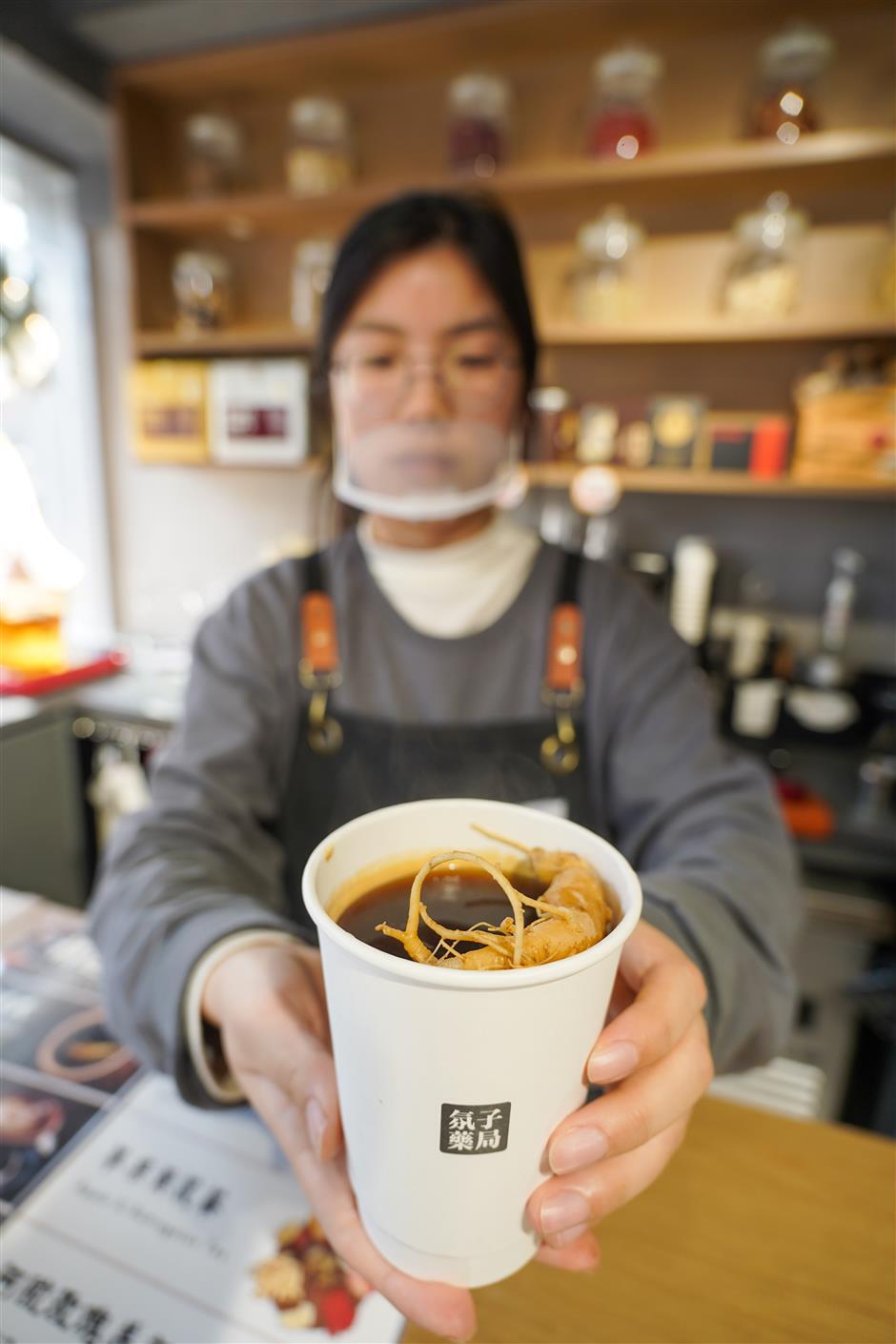
Other drink options include ginseng Americano coffee, ginseng licorice vitality tea, and herbal tea for liver health and eye care, priced between 18 and 25 yuan.
Jiang Xiaowei / Shanghai Daily
Ginseng Americano coffee is a popular drink at the Numerator Pharmacy.
"Now many young people are talking of yangsheng (health management), and this addition of herbal medicine would help ease their sense of guilt often associated with drinking too much milk tea," said Ye, adding that like many office workers her age, overwork and staying late at night affect her health.
When this aggressively diversified store, one of the 200 under Shanghai No. 1 Pharmacy Co Ltd, was launched on December 23, it had other considerations beyond the immediate health of the young people.
Jiang Xiaowei / Shanghai Daily
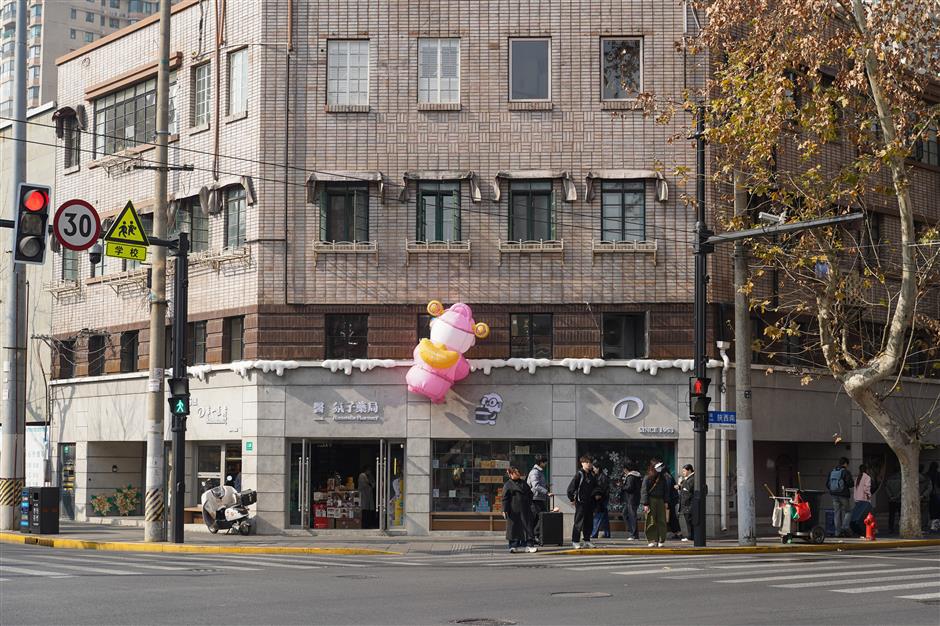
The pharmacy is housed in a historical building at the intersection of Shaanxi Road S. and Fuxing Road M.
Located in a prime downtown spot adjacent to historical buildings and office towers, the store primarily caters to a young demographic. After consulting with young employees, the company decided to allocate space for herbal medicine drinks and DIY mixed beverages to meet the all-day needs of young people.
Zhao Jie, the store manager, said they could sell 50-60 drinks a day on weekends, with the most popular including ginseng Americano and milkvetch root tea. As an accredited pharmacist, Zhao also advised interested clients on which drug to use at the counter on the second floor.
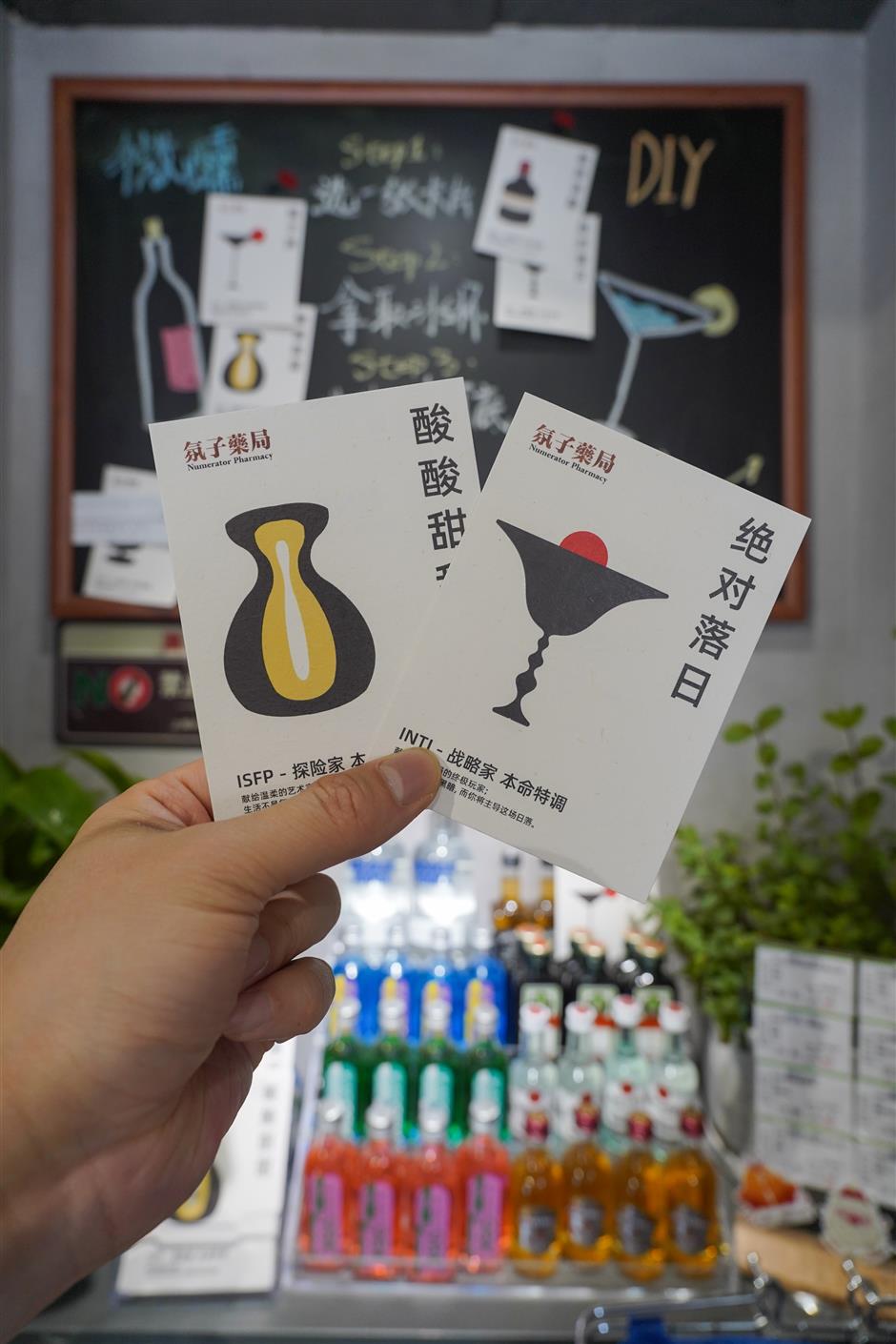
Jiang Xiaowei / Shanghai Daily
Some special offerings at the Numerator Pharmacy
The facility is also equipped with AI-driven diagnostic devices which detect a consumer's internal dampness condition through testing, and subsequently determine the optimal medicinal formula tailored to the consumer's individual constitutional traits.
Being located in a touristy area, the pharmacy strives to capture a fraction of the heavy stream of younger visitors going along the streets, and different stores have developed strategies catering to different demographics in view of specific locations.
From warm hospitality to self-service
In a highly competitive market like Shanghai, even entrenched players need to adapt and innovate to stay ahead of the pack, like this first Haidilao hotpot Dapaidang franchise housed in Golden Magnolia Plaza in Huangpu District.
Here, the hotpot brand renowned for its thoughtful service operates in a new mode: self-service, or DIY (do-it-yourself). Far from seeing a drop in patrons, it has successfully expanded its customer base by capitalizing on the novel dining experience.
Zhu Yiwu, a chief waiter, took a few minutes to answer our questions while busy trying to meet requests from customers.
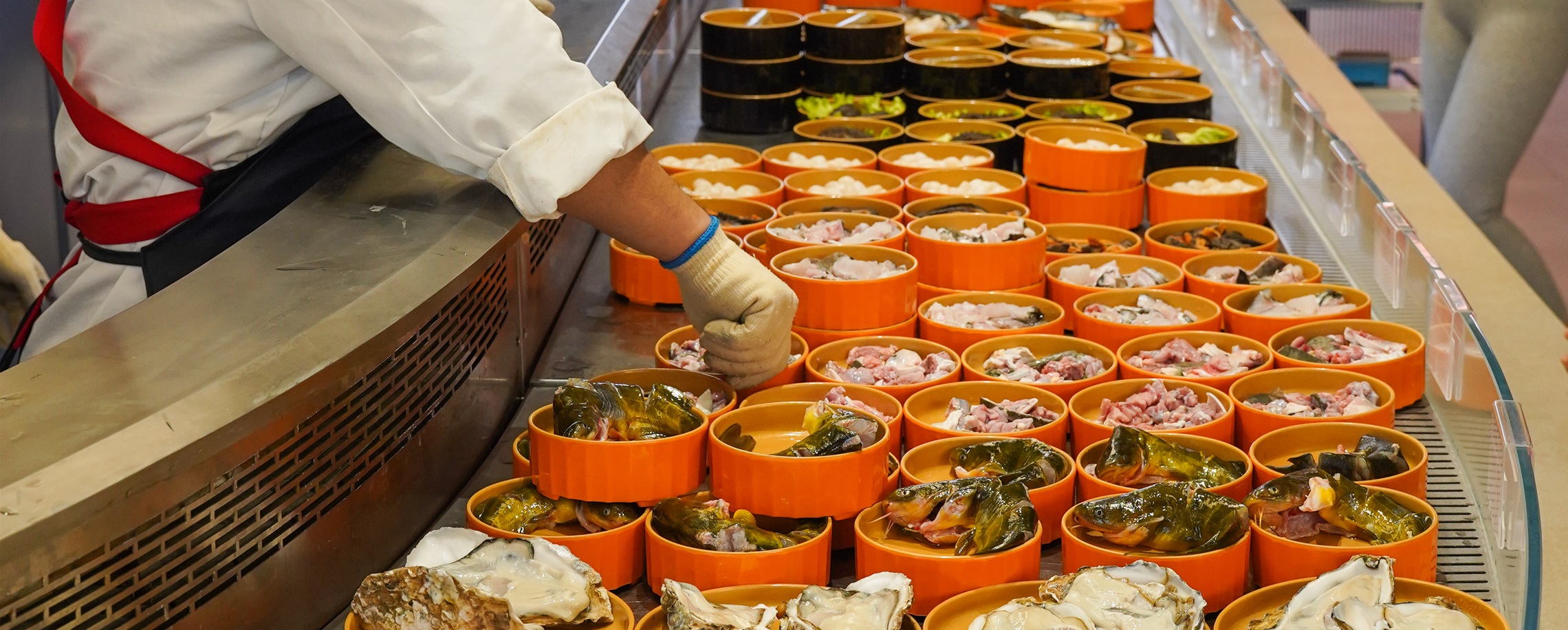
"When customers take their seats, the first thing for them is to push this cart and take dishes of their choice from this long, circular rack, where customers could appraise the conditions of the food themselves, and the success of the DIY or self-service mode exceeds our expectations," said Zhu.
It was barely 3:30pm and was a workday, but customers were already pouring in. As people selected their dishes, just like in a supermarket, diners could clearly see their purchase, quality and price.
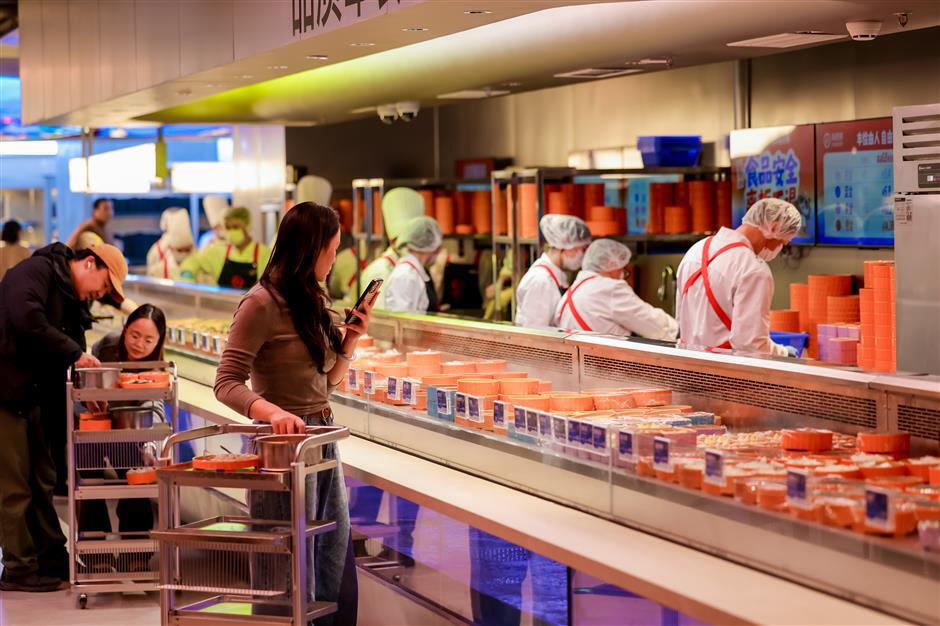
Jiang Xiaowei / Shanghai Daily
At this Haidilao franchise diners push a cart and pick dishes of their choice.
Paying for the meal was also simpler.
After dinner, the empty dishes are stacked on a drawer under the table and automatically sensed and identified, with the price calculated and displayed on the screen at the side of the table.
Customers pay their bills by scanning a QR code on the screen, and the seat is immediately available for other customers.
When we left at about 5:30pm, long queues were waiting for seats. The restaurant remained in operation overnight until 7am.
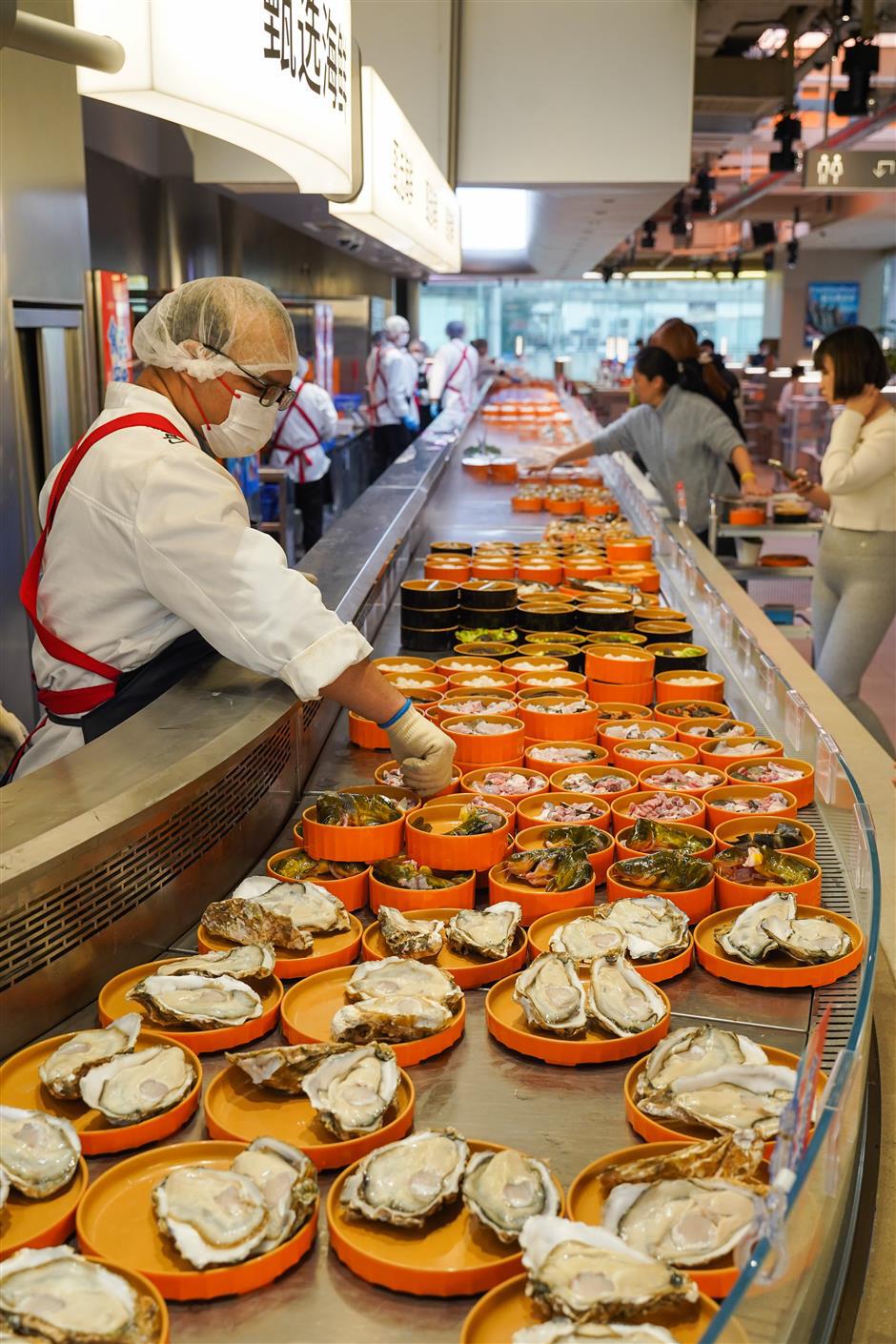
Jiang Xiaowei / Shanghai Daily
Dinners at the new Haidilao outlet select seafood dishes.
Zhu confessed that, compared with the traditional method of ordering a dish with the assistance of a waiter or waitress, who often juggled the individual demands of customers, this new DIY model saves labor by making everything customers need visible within their line of sight.
Still, qualified servers were in such short supply that before this restaurant opened on December 27, several experienced staff were temporarily transferred from Haidilao franchises in Zhengzhou, capital of Henan Province, to the Shanghai franchise. As Zhu observed, these seasoned staff could help stabilize routine operations at the launch of the new outlet.
This direct display of food appeals to foreign travelers because the DIY approach reduces the need for an interpreter. Earlier that day, Zhu had received a request from a travel agency asking to book 400 seats for tourists from South Korea.
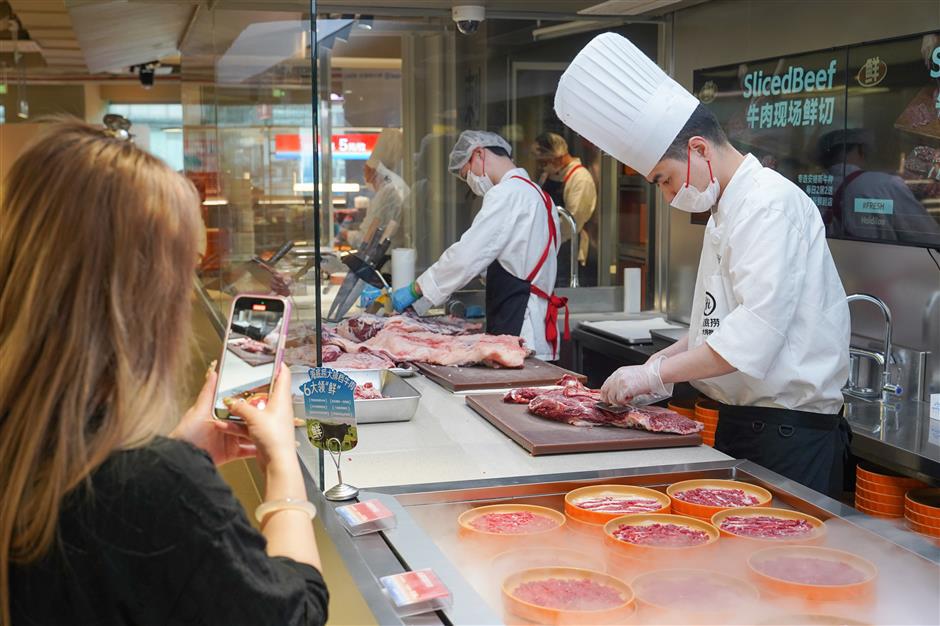
Jiang Xiaowei / Shanghai Daily
A diner snaps a photo of the chefs whipping up dishes at the newly opened Haidilao.
Niu Jiaqi, a waitress, drew attention when she was helping a South Korean customer pick the dishes, speaking fluent English. She arrived in Shanghai from Zhengzhou on December 24 and started working the next day.
Most of her colleagues who had called here had since returned to Zhengzhou in anticipation of surging business during the Spring Festival, but she remained. Here, she could earn twice as much, with employees receiving four times the normal rate on holidays.
Niu revealed that, in contrast to Zhengzhou, South Koreans make up the largest contingent of foreign customers in Shanghai. A case in point was 20-year-old university student Minseung Kim, who was savoring the dishes alongside her mother.
"There are Haidilao restaurants in Seoul, Busan and Jeju in South Korea, and after enjoying it there, I visited Haidilao in Shanghai with my mother," Kim said.
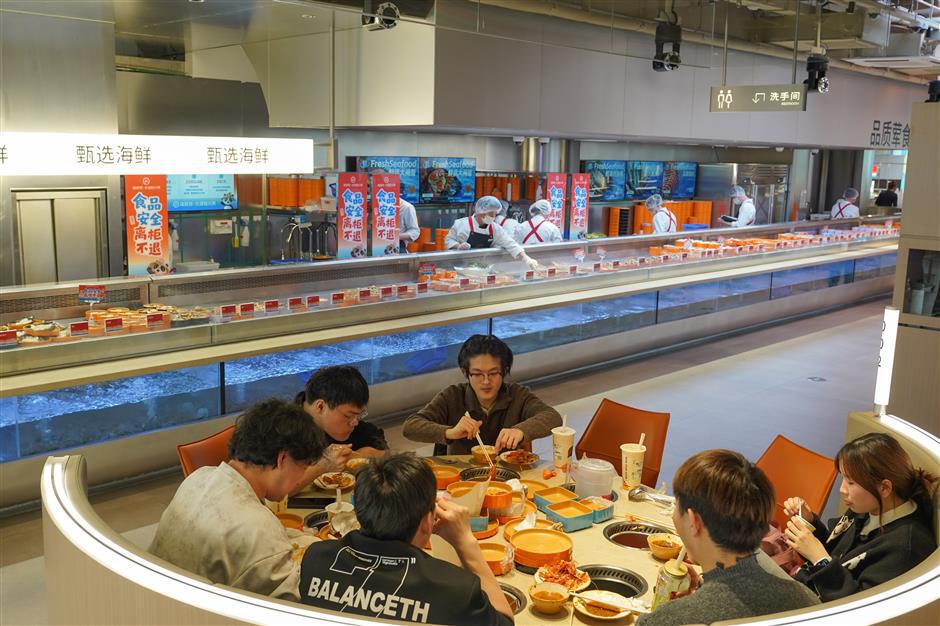
Jiang Xiaowei / Shanghai Daily
This DIY mode allows diners to enjoy their meals with minimal distractions.
"What I found especially interesting was that you could push a cart yourself and choose the ingredients you wanted, making it easy to enjoy Haidilao even when dining alone," she added.
One who chose to dine alone was Jin Yan, a graduate student from Hangzhou, Zhejiang Province. After having the meal here, she would go straight to the airport to fly to Lhasa in Tibet for a weekend holiday. She decided to have her meal here after reading the reports.
Dining alone at a conventional restaurant could be conspicuous, but not here.
Beyond that, there are further innovative offerings. Take the restaurant on Henan Road M. for instance, where a dining experience evolves into a two-hour immersive feast, featuring Chinese dance displays that encompass diverse regional flavors and dynastic aesthetics.
Patrons can not only relish authentic Chinese cuisine, but also don traditional costumes and indulge in the charm of traditional music and stage performances.
A number of foreign diners, deeply enchanted by the mesmerizing shows, expressed a keen desire to explore comparable immersive cultural experiences in other parts of China.
Apparently, such diversification, innovation, or marriage of business and culture would continue to add to the appeal of the city as an international metropolis.


















 2026-01-20