In a hushed villa on Huaihai Road, far from Shanghai’s usual retail dazzle, the earth tells its own story. Not through gems polished to perfection, but through raw crystals, ancient meteorites and minerals scarred by time.
Running through next March, the exhibition “Journey with Minerals” transforms the act of looking at jewelry into something deeper: an encounter with geology, culture and imagination at once.
Curated jointly by L’ÉCOLE, School of Jewelry Art, and the Mineralogy Museum, Mines Paris, the exhibition brings together 70 rare mineral specimens, high jewelry masterpieces and artworks from public institutions and private collections. The result is neither a traditional jewelry show nor a scientific display, but a carefully staged dialogue between what the earth creates and what human hands later transform.
“Jewelry’s true beginning comes long before a craftsman’s workbench,” said Giulietta Yu, Managing Director of L’ÉCOLE. “It begins with the pulse of the earth itself – minerals formed over millions of years, carrying the memory of the planet.”
The exhibition unfolds through Matter, Jewelry, Technology, Art and Space, guiding visitors from crystal structures and atomic order to the far reaches of the cosmos.
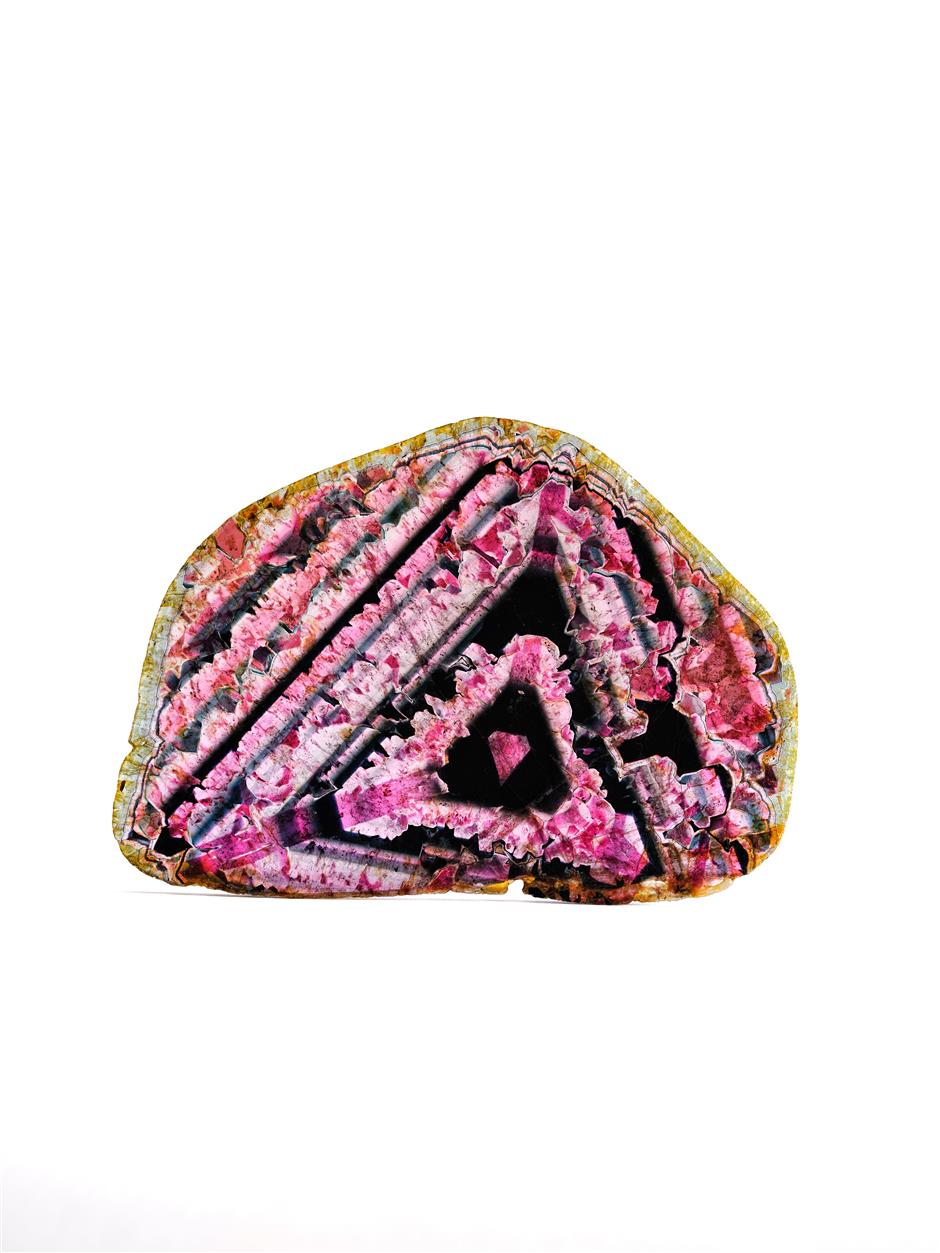
It begins with minerals in their raw state, dismantling the assumption that dramatic geometries must be man-made. A highlight here is a fluor-liddicoatite tourmaline from Madagascar, whose polished cross-section reveals concentric bands of color arranged with near-mathematical precision. The effect resembles a deliberately composed graphic pattern, yet it is the outcome of atomic repetition rather than human intent.
Benjamin Chelly
A fluor-liddicoatite tourmaline from Madagascar
“The mineral world captivates us with its brilliant colors and remarkably ordered structures,” said Eloïse Gaillou, Director of the Mineralogy Museum, Mines Paris. “We are driven to understand different minerals, and to learn how they can be transformed and used.”
Moving into the Jewelry section, raw specimens are placed beside finished works, shifting attention from luxury to transformation.
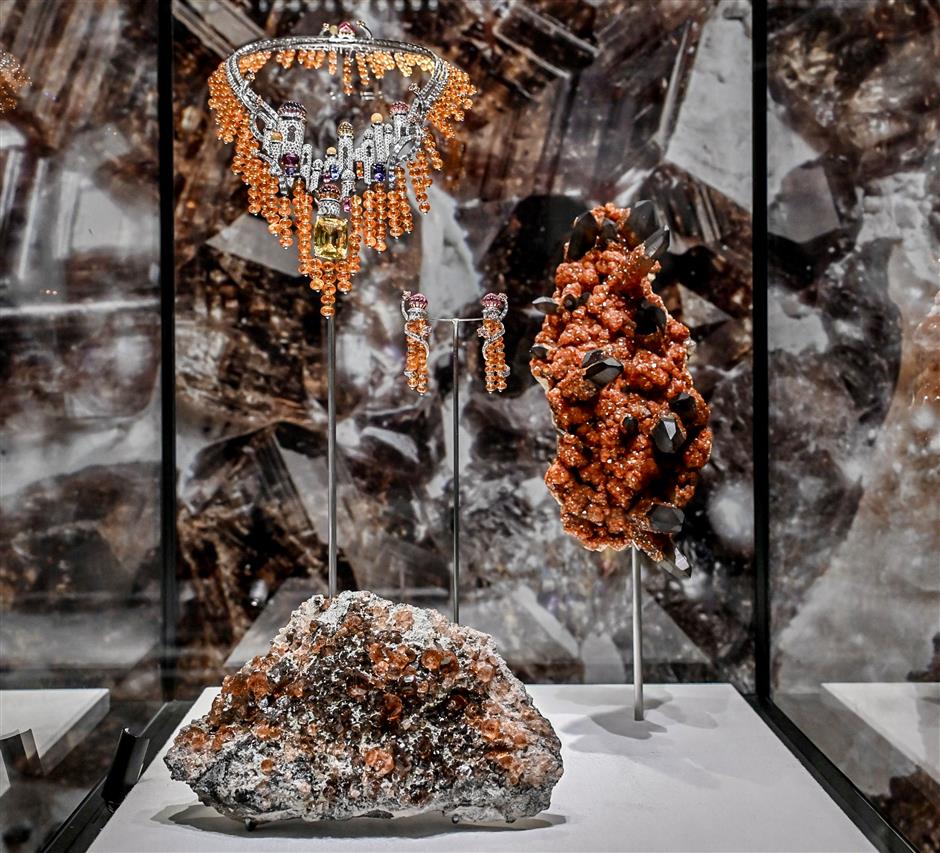
The contrast is most visible in the displays of the high jewelry sets from Van Cleef & Arpels’ collections, composed of gold and a spectrum of gemstones, including sapphire, amethyst, opal, diamonds and tourmaline. Shown alongside mineral counterparts, they read less as ornament than as an exercise in selection – how color saturation, hardness and rarity determine which stones become jewels.
Ti Gong
A high jewelry set from Van Cleef & Arpels’ collection
Materials with particular resonance for Chinese audiences are also foregrounded. Jade and malachite, both long embedded in domestic material culture, anchor a quieter narrative about how value is culturally defined rather than universally fixed.
The Technology section widens the lens, examining minerals as drivers of industrial and scientific development. Copper-bearing ores and metallic minerals are presented not as decorative materials but as resources that shaped metallurgy and modern manufacturing.
Tan Weiyun
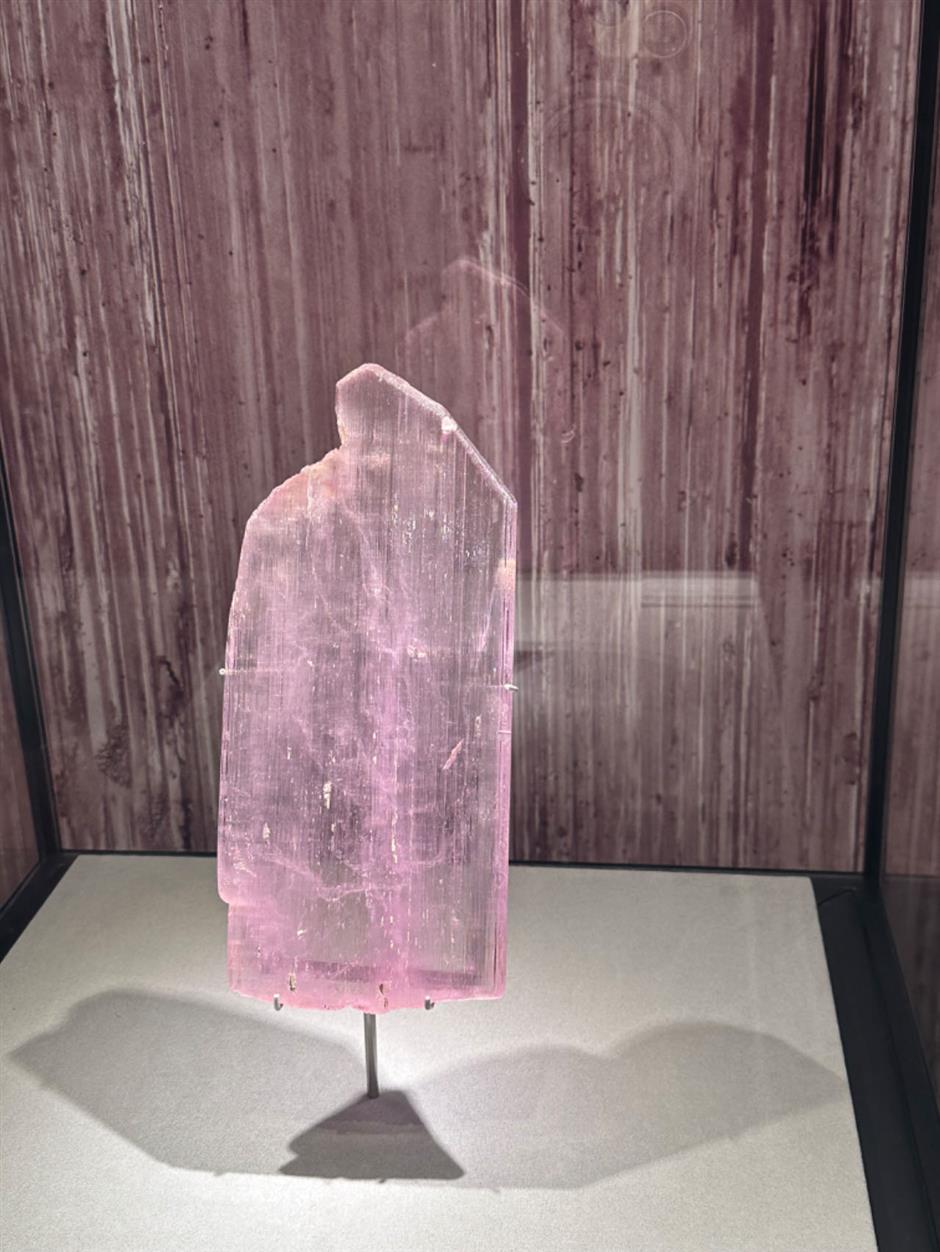
A kunzite (spodumene) from Afghanistan
With its soft pink translucency and elongated crystalline form, a kunzite (spodumene) specimen from Afghanistan initially reads as delicate and ornamental. However, it is presented as a source material: spodumene is a primary ore of lithium, linking the crystal’s fragile beauty to lithium-ion batteries that underpin contemporary energy and storage technologies.
The emphasis is analytical rather than nostalgic, tracing how extraction and processing altered societies long before minerals became symbols of refinement.
In Art, the exhibition turns to minerals whose appearance borders on the figurative. An eye-shaped agate from Uruguay, its concentric bands forming what looks uncannily like an iris, demonstrates how natural pattern invites interpretation. Nearby, a vivid azurite from Australia features two deep-blue circular formations set against pale host rock. Often called “sun azurite,” the specimen shows how mineral processes can create compositions that look deliberately designed.
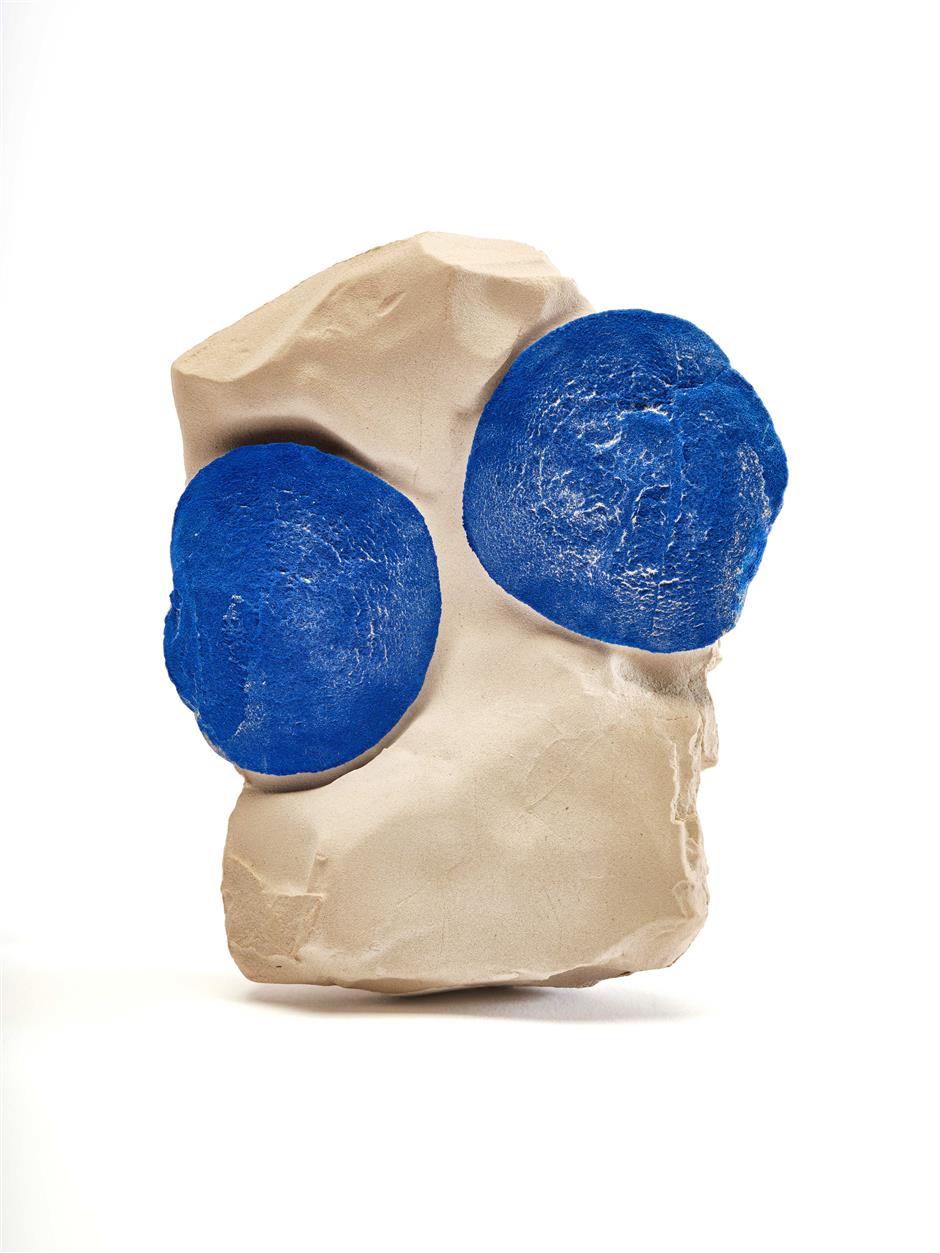
Benjamin Chelly
These objects underline the exhibition’s central proposition: that minerals have long functioned as an inadvertent source of imagery, influencing visual culture before artists ever touched them.
The Space section introduces minerals not formed on this planet. The focal point is the Esquel pallasite meteorite, discovered in Argentina, its iron-nickel matrix embedded with translucent olivine crystals. Suspended between scientific specimen and sculptural object, it reframes mineralogy as a cosmic discipline, offering insight into the early formation of the solar system.
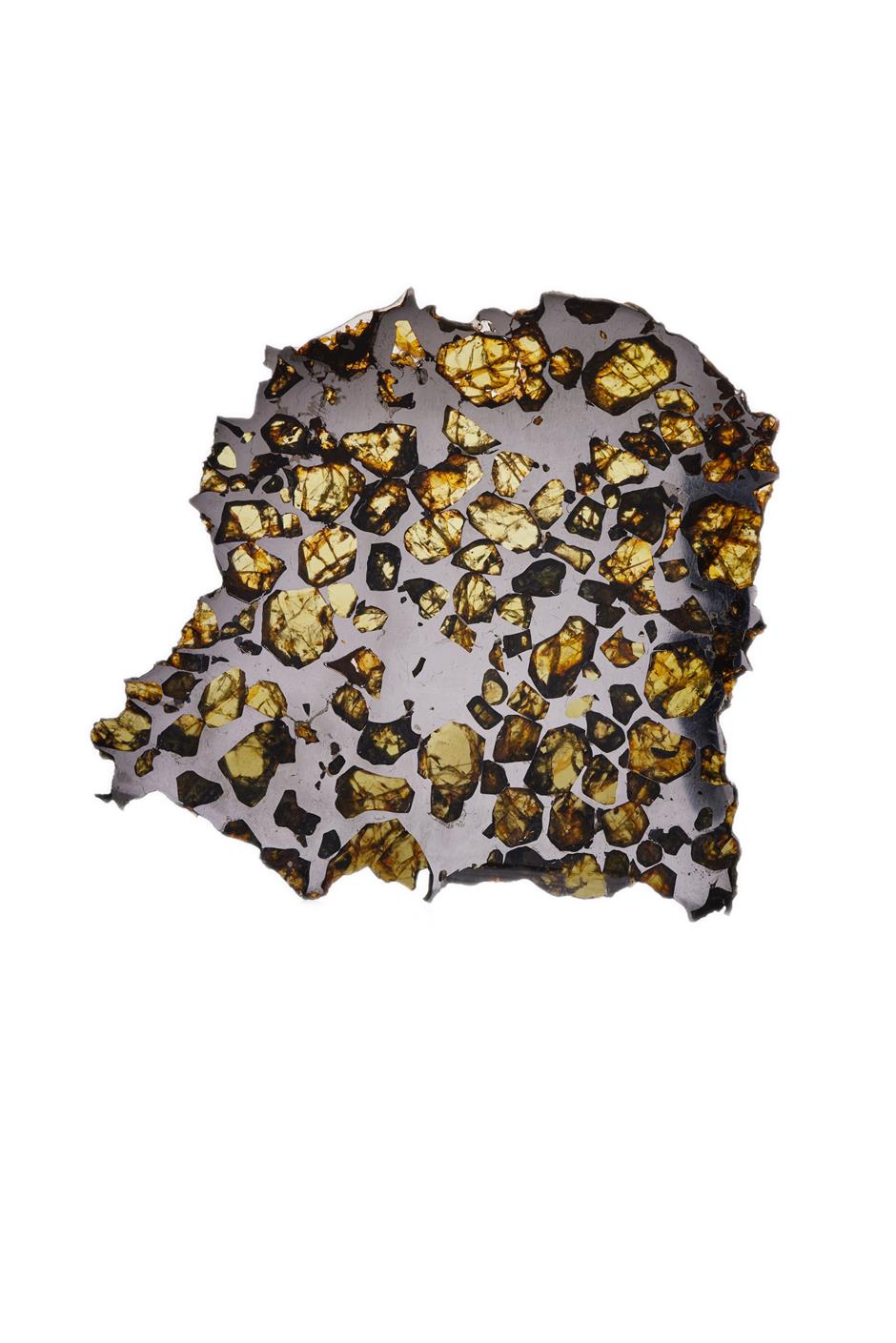
Benjamin Chelly
Esquel pallasite meteorite, which was discovered in Argentina
“In this exhibition, the evolution of minerals is presented in full. These geological treasures, part of humanity’s shared scientific heritage, still hold many unknown secrets, along with unexpected stories waiting to be discovered,” Gaillou said.
Date: through March 29, 2026
Hours: 10:30am-6:30pm. Tuesdays to Sundays.
Address: 796 Huaihai Road Middle 淮海中路796号
Admission: free

















 2026-03-06