What does Shanghai look like through your eyes?
Is it a city of warm colors, a neon-lit metropolis of the future, or a place where tradition and modern life meet?
At the ninth China International Import Expo (CIIE), visitors can answer that question in an unexpected way: by designing their own souvenir ticket.
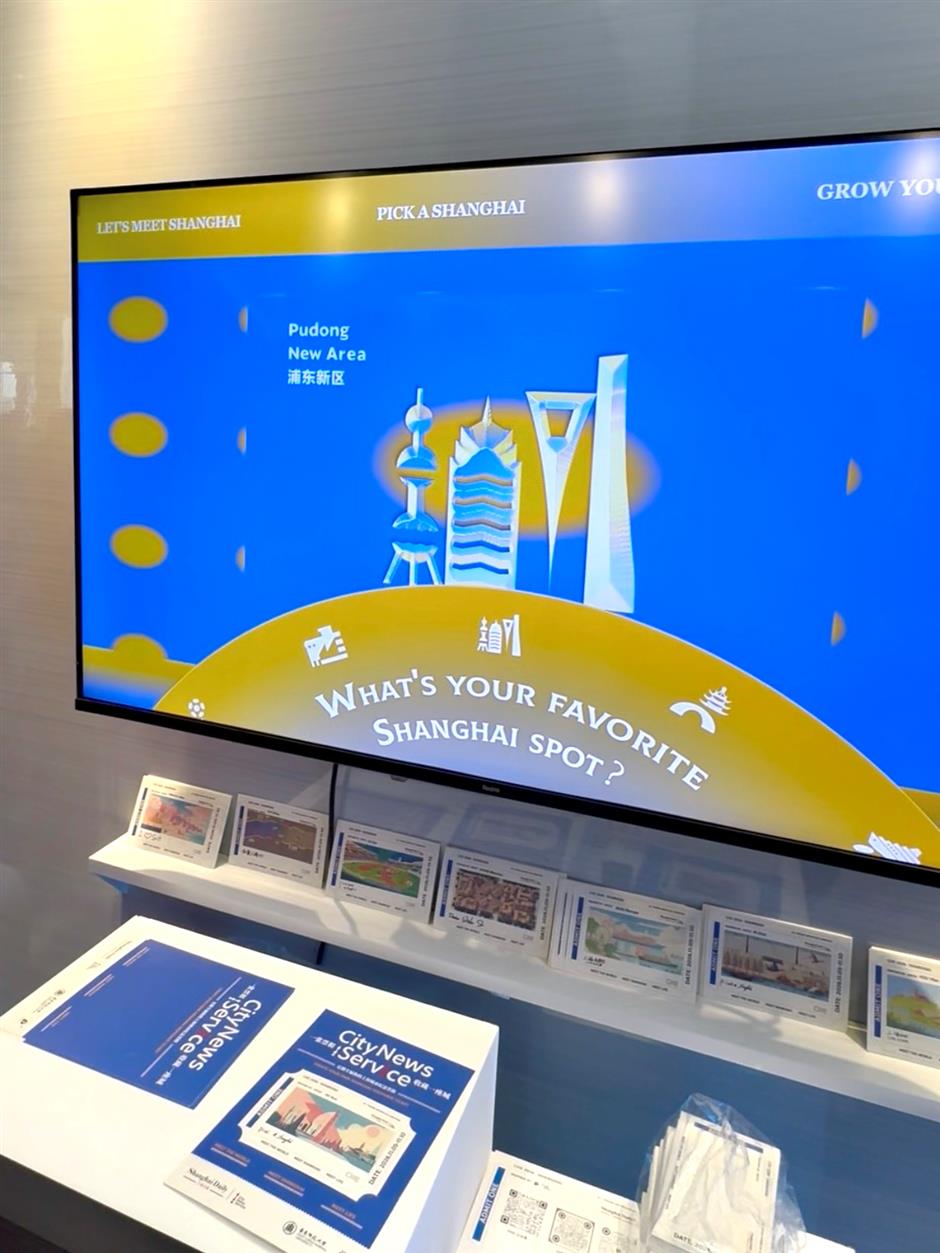
Inside the media center at the National Exhibition and Convention Center, an interactive installation invites visitors to choose a color palette, select an artistic style, pick a landmark from one of Shanghai's 16 districts and add a handwritten signature.
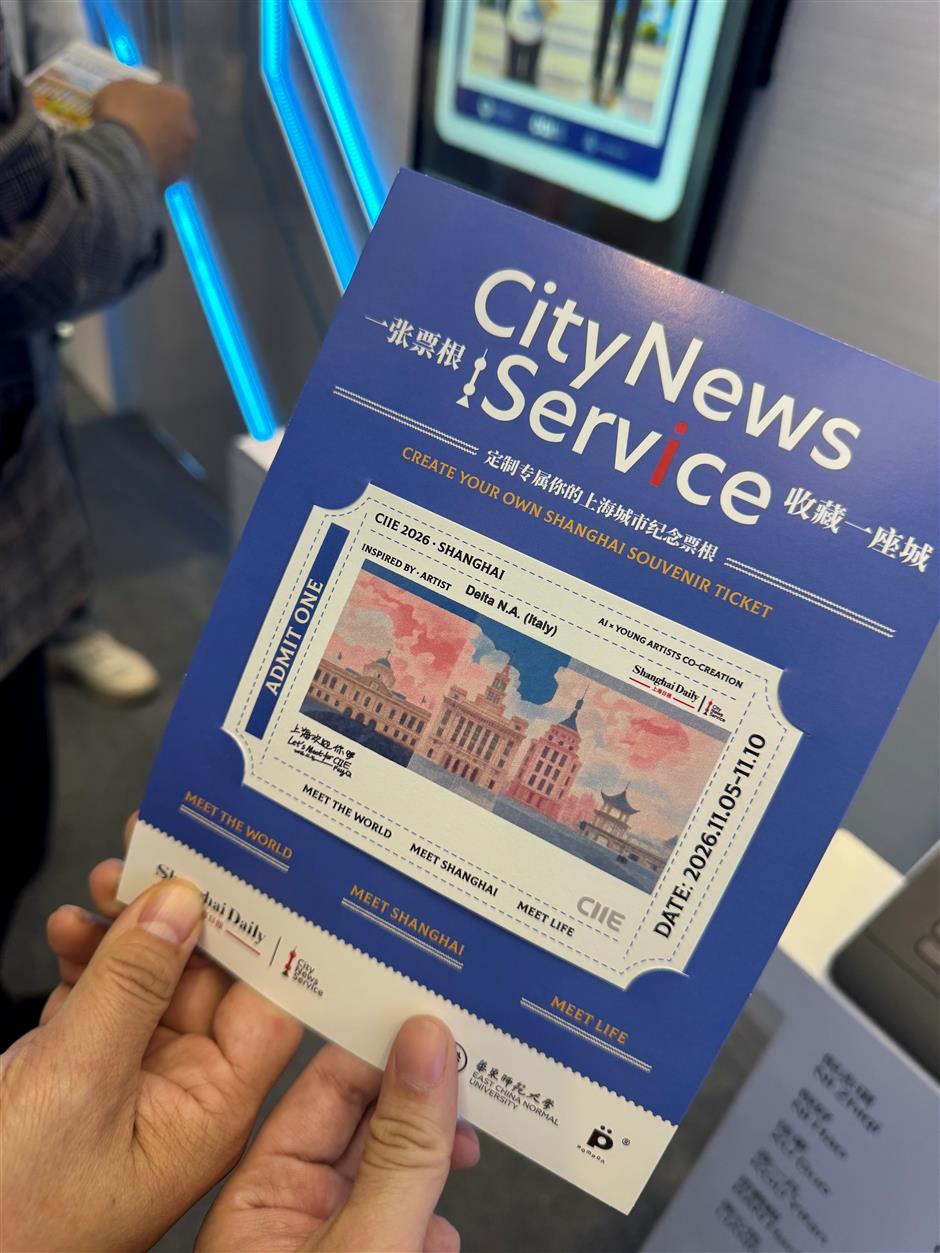
Within minutes, an AI-powered system transforms those choices into a special illustration of Shanghai, printed on a ticket-sized keepsake that visitors can take home.
The project, titled "Create Your Own Shanghai Souvenir Ticket," is a collaboration between Shanghai Daily and the School of Design at East China Normal University. Set up in the AI Park area of the media center, it brings together artificial intelligence, visual art and the city's cultural identity in an experience that turns visitors from spectators into participants.
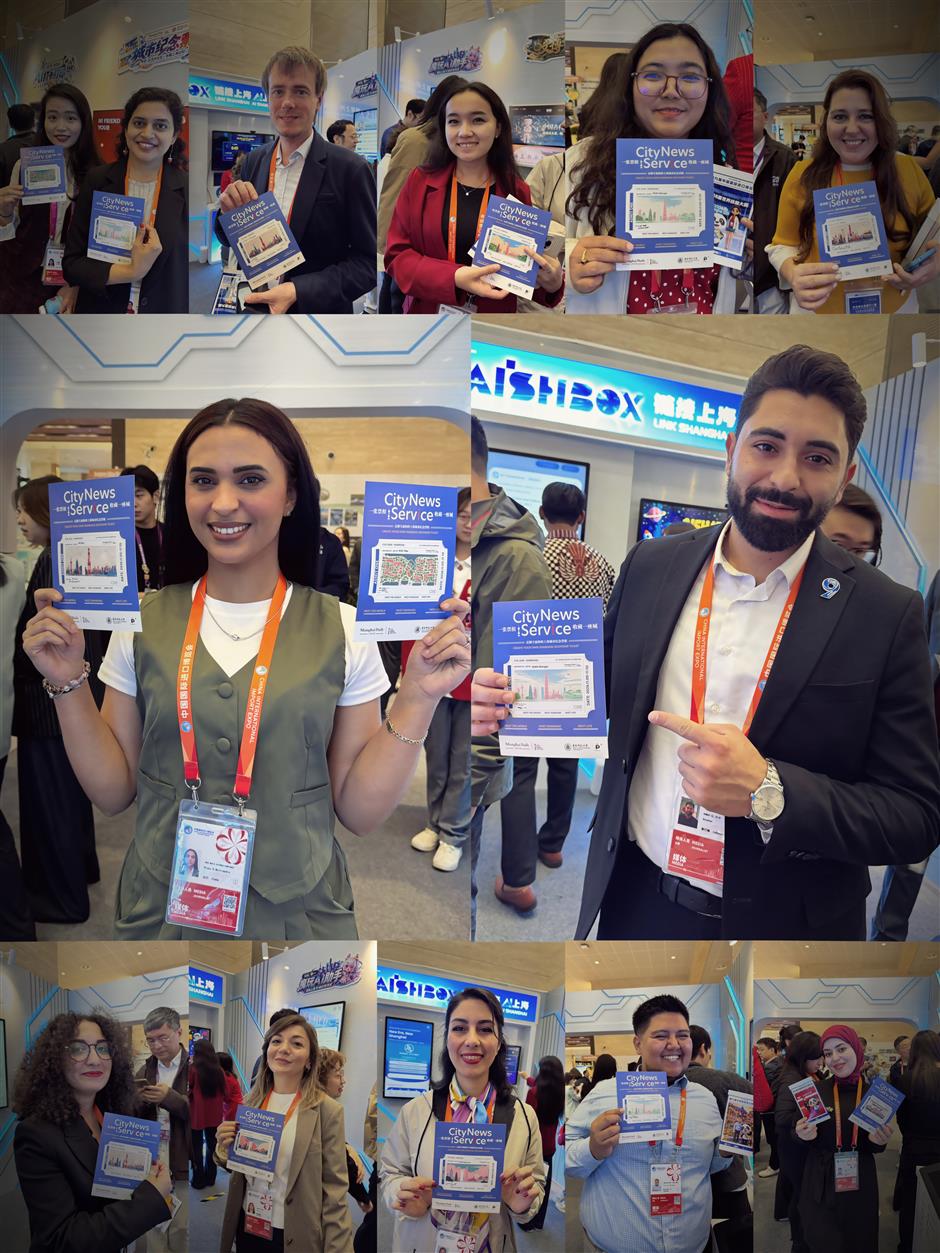
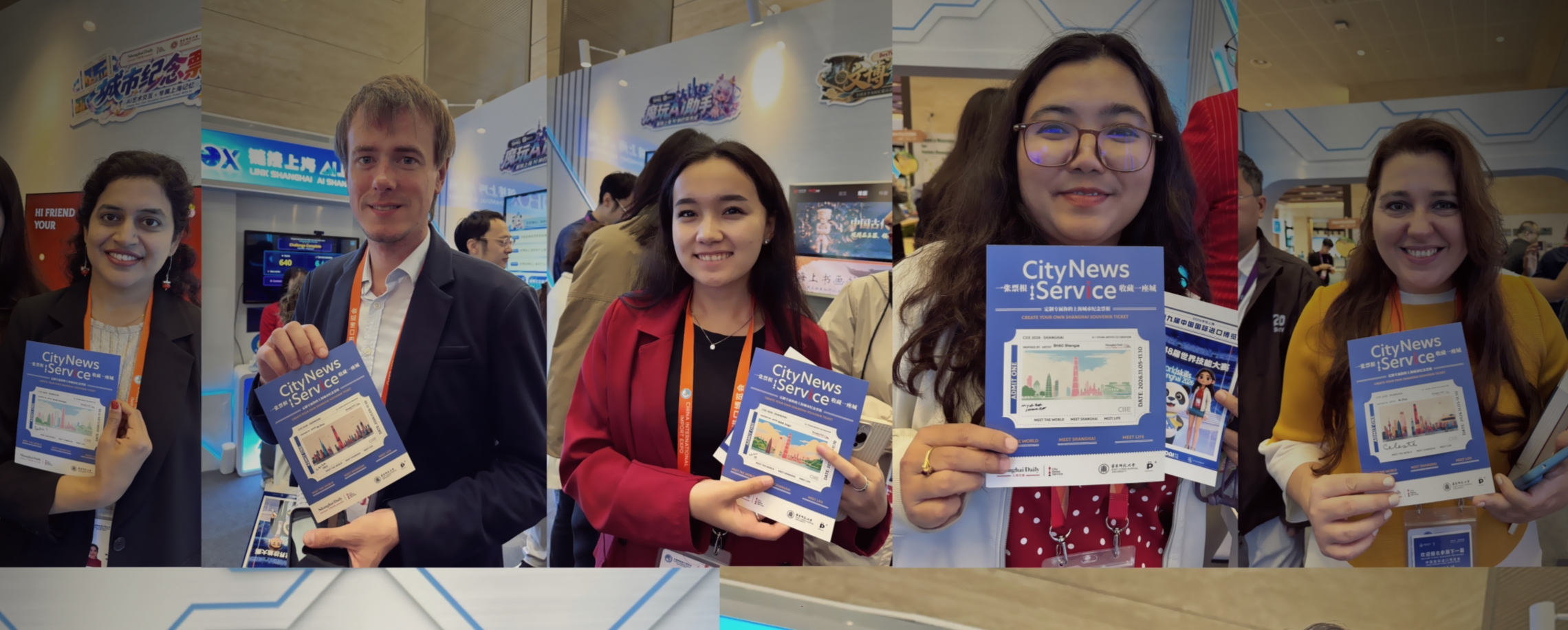
Since the media center opened on November 3, the installation has seen nearly 800 visits, drawing journalists and visitors from countries including Lebanon, Egypt, India, Germany, Russia, South Africa and Argentina.
For many, the appeal lies in the simplicity of the experience. It takes less than two minutes to create a souvenir that is both personal and distinctly tied to Shanghai.
"This is the first interesting gift I've given myself at this year's CIIE," one journalist remarked after trying it. Another visitor described the experience as "a gift of love from Shanghai."
A city remembered, one ticket at a time
The idea grew out of a broader reflection on how people remember a city.
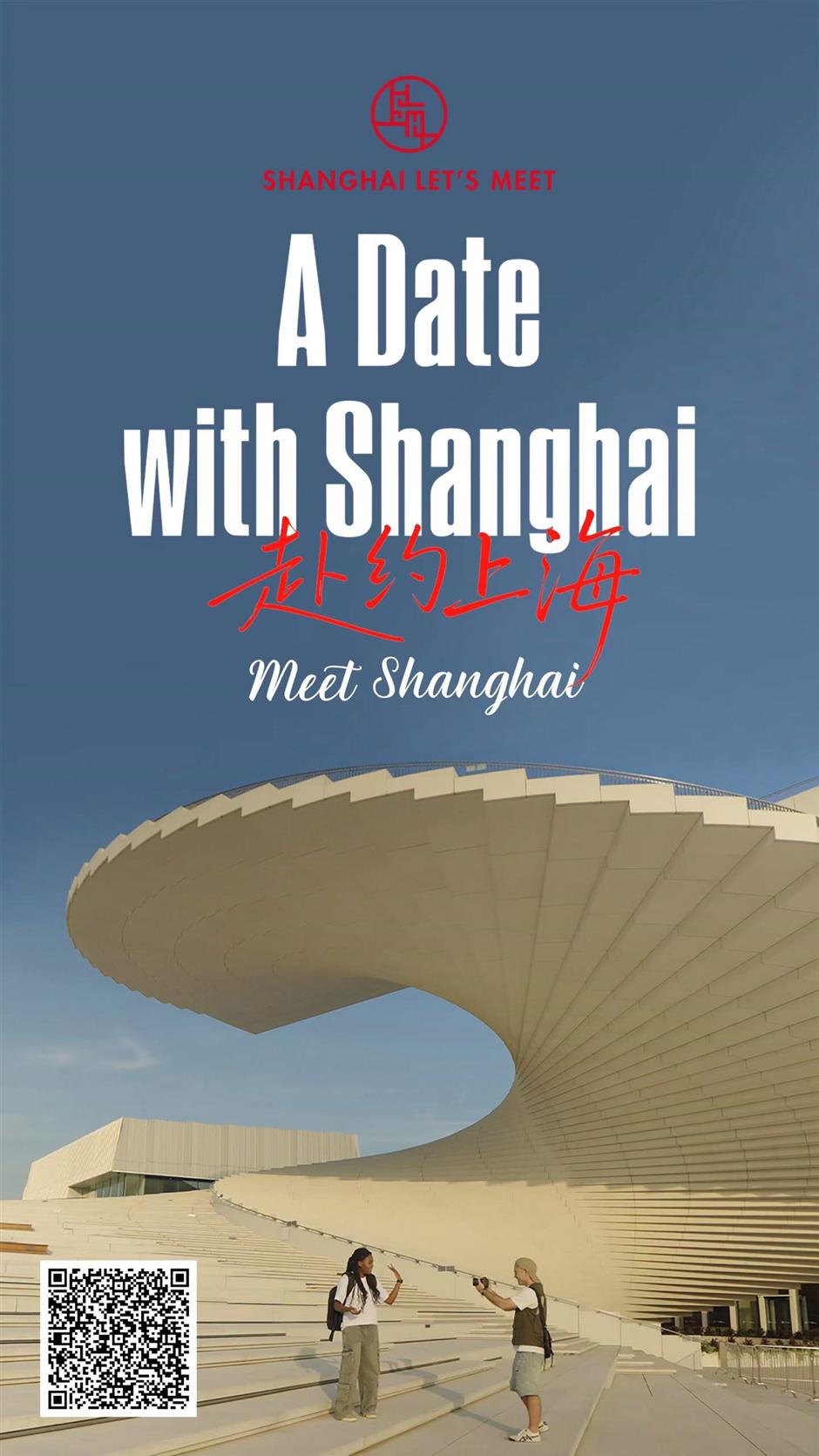
On November 4, the eve of the CIIE opening, the Information Office of Shanghai Municipal and Shanghai Daily jointly released "A Date with Shanghai," a short film promoting the city through everyday stories carried by tickets – from travel and exhibitions to performances and urban life.
A ticket is more than proof of entry or payment. It can mark a particular day, an encounter or a place someone once visited.
In an increasingly digital world, the project revisits that familiar object and gives it a new dimension. Rather than simply reproducing a traditional ticket, it uses AI and artistic design to invite people to create their own visual memories of Shanghai.
Each ticket reflects a combination of personal choices, making the city image different for every participant.
From a few choices to a work of art
The creative process is straightforward.
Visitors begin by selecting a word that captures their impression of Shanghai. Options include WARM, CHILL, NEON, FUTURE, VINTAGE and POP – a collection of visual moods and urban personalities.
They then choose a landmark from Shanghai's 16 districts and write a signature or slogan by hand.
The AI system combines these elements to generate an illustration, which is printed on the spot. Visitors can place the finished ticket in a specially designed CIIE keepsake holder.
The visual experience was developed by Wu Yali, a faculty member specializing in visual communication design at East China Normal University's School of Design.
Her team wanted the installation to feel less like operating a machine and more like receiving an invitation from a friend.
"We didn't want visitors to feel that they were simply operating a machine," Wu said. "We hoped they would feel as if they were stepping into a breathing space of color, where they could make choices, leave their own marks and eventually take home a memory of Shanghai."
The installation uses soft geometric forms and blended colors, with warm gradients replacing the cool, hard-edged visual effects often associated with technology. A circular spatial design further creates a relaxed atmosphere, making the interaction feel closer to a playful personality test than a technical demonstration.
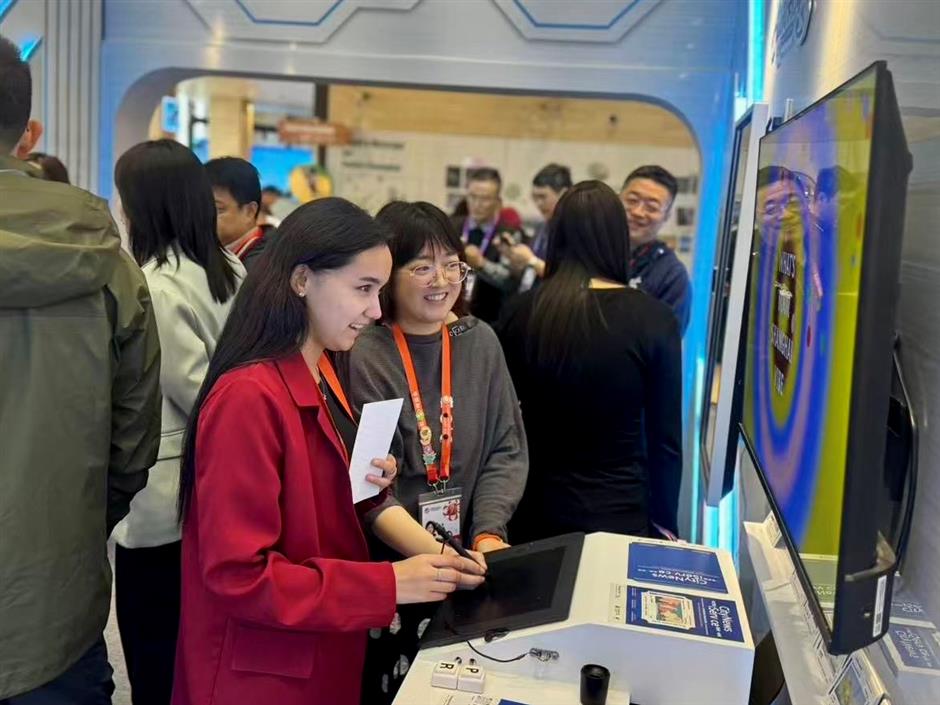
A foreign journalist (in red) interacts with the installation to create a personalized souvenir commemorating her visit to Shanghai and the CIIE.
When artistic styles meet artificial intelligence
Behind the apparent simplicity is a more complex creative process.
The project incorporates the visual languages of 16 artists and designers into its AI generation system. Rather than simply layering existing artworks onto photographs of landmarks, the team trained the system to draw on different artistic approaches when generating new images.
The contributors come from diverse cultural and professional backgrounds.
Chinese contemporary artist Ni Zhiqi's work brings together Western artistic traditions and Eastern philosophical thinking. Ni Hao, an artist and faculty member at Shanghai Institute of Visual Arts, is known for oil paintings featuring vivid colors and strong visual impact. Italian contemporary art duo Delta N.A. explores emotional expression through softer palettes.
Younger creators bring another range of perspectives. Gen-Z artist Xu Guo works with exaggerated geometric forms and expressive lines, while designer Bian Jingyi combines imagination with fashion influences. Sebastian Correa, a Chilean architect living and working in Shanghai, contributes an architectural perspective through his sketching practice.
Graduates of East China Normal University's School of Design also took part, adding further approaches from across the design industry.
Together, their styles give the AI system a diverse visual vocabulary through which to reinterpret Shanghai's landmarks.
The challenge, however, was ensuring that artistic transformation did not come at the expense of architectural identity.
Shi Wei, a faculty member at the School of Design who led the large-model training, said one of the team's biggest challenges was balancing artistic expression with the recognizable structure of Shanghai's buildings.
During style transfer, an AI model can alter architectural details in ways that make a landmark difficult to identify. On the other hand, placing too much emphasis on preserving the original structure can diminish the distinctive qualities of an artist's visual style.
"Finding a balance between the two was the core problem we needed to solve," Shi said.
The system was refined to bring together three elements: the artistic style selected by the visitor, the architectural features of the chosen landmark and the handwritten text.
That combination also means that selecting the same building does not necessarily produce the same result. Different visual moods and personal messages can lead to markedly different interpretations.
For Shi, the value of AI extends beyond speeding up image generation. It also offers a way to translate artists' visual languages into reusable digital resources, allowing visitors to experience their styles even when the artists themselves are not physically present.
In this sense, the technology serves not simply as a production tool, but as a bridge between artistic creation and public participation.
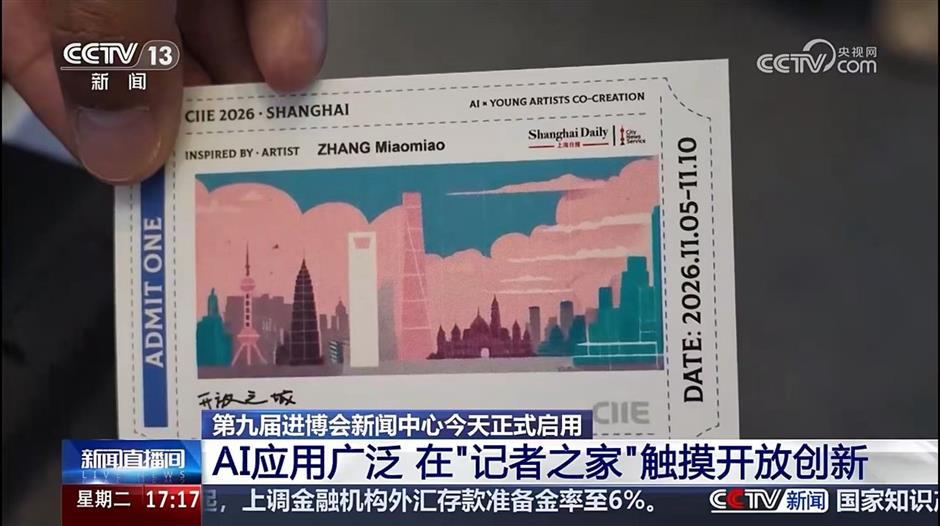
The AI installation is covered by China Central Television.
Bringing design beyond the classroom
The project also reflects a broader collaboration between media organizations and universities in exploring new forms of urban communication.
Chen Wenhao, head of the Visual Communication Design program at East China Normal University's School of Design, said the partnership brought together the university's expertise in visual design, AI technology and interactive experiences with Shanghai Daily's content resources, media platforms and international communication experience.
He sees such collaborations as an opportunity to take design education beyond the classroom and connect it more directly with society.
"Design should not be limited to visual expression," Chen said. "Through creativity and interaction, it can make urban culture more vivid, accessible and easier to share."
For visitors at the CIIE, the outcome is something tangible: a small ticket carrying their own interpretation of Shanghai.
But the experience also offers a different way of engaging with a city. Instead of simply looking at its landmarks, visitors can reinterpret them, add their own visual preferences and leave a personal mark.
A city, after all, is remembered in many ways. Sometimes, all it takes is a small ticket to bring those memories together.

















 2026-11-08