© Sean Scully. Courtesy Lisson. Photography by Alessandro Wang
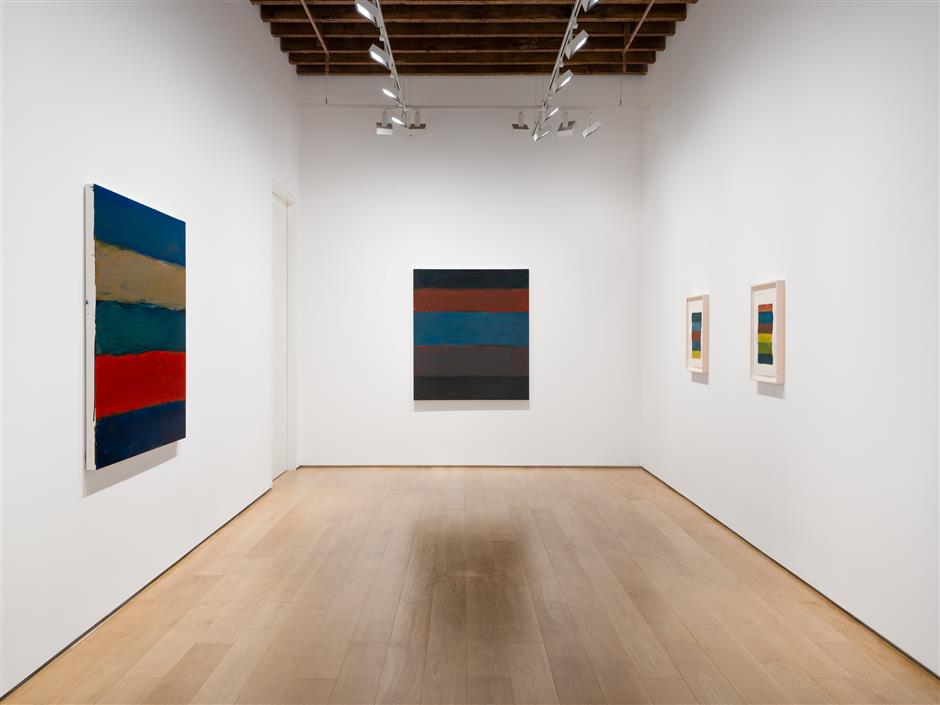
"Sean Scully: Landline," Lisson, Shanghai
After five decades of painting stripes, Sean Scully still doesn't read too much into them.
Ask the Irish-born artist what his signature blocks and bands of color can express today that they couldn't in his younger years, and he gives a refreshingly untheoretical response.
"I'm not interested in thinking like that, examining myself, or interrogating myself," he added, before declaring with unmistakable confidence. "I'm a great colorist. I know this. Thank you, God."
At 81, Scully has little interest in dissecting his own artistic evolution. But get him talking about color, the beauty of imperfection, or the need to make something ugly, and he has plenty to say.
Those ideas run through two contrasting bodies of work recently presented in Shanghai: the quiet, atmospheric "Landline" paintings at Lisson Gallery and the fractured, almost combative "Tower" series shown at the nearby Capitol Theater Building.
The "Landline" exhibition, running through January 30, 2027, marks Scully's first solo presentation in Shanghai since his landmark 2014 retrospective.
The paintings initially seem straightforward. Their surfaces have thick horizontal red, blue, ochre, and gray bands.
Figures, buildings, and landmarks are absent. The colors evoke a fading horizon, a darkening sea, and the last light over land.
Scully said the works grew largely out of his experiences looking at the Irish landscape. Had he lived in the 19th century, he mused, he probably would have been a landscape painter.
He even joked that adding a fishing boat to one of his stripes might make his work more popular in Ireland.
Instead, he leaves the boats out.
The horizontal bands preserve the rhythm of abstraction, but they are anything but mechanical. Their edges waver and overlap. Paint is dragged across paint, sometimes exposing what lies underneath, sometimes burying it beneath another layer.
In "Landline Rouge" (2026), deep wine red, navy blue, ochre and flashes of scarlet form a composition that feels both solid and unsettled. The colors seem to carry the weight of weathered stone and the changing light of a landscape.
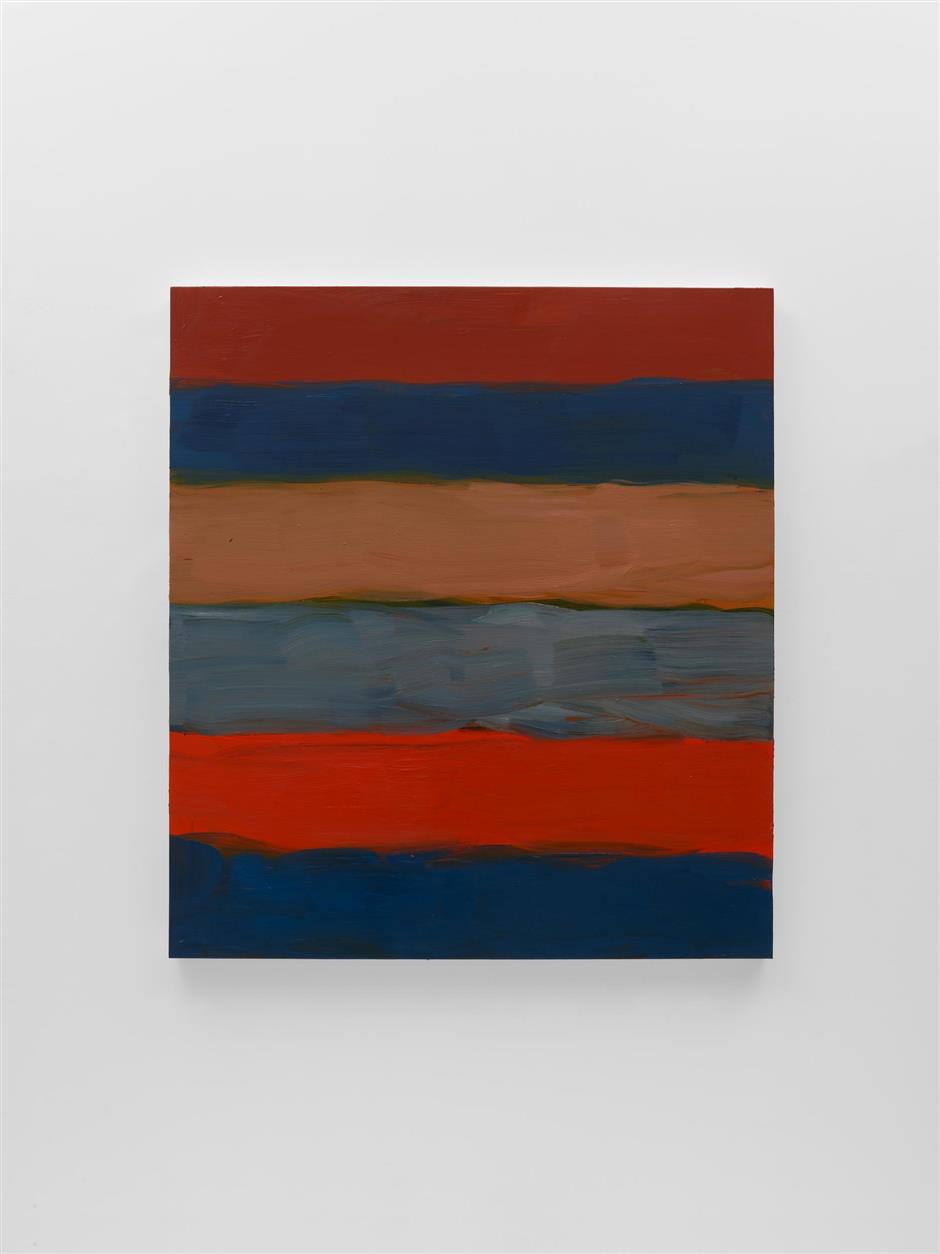
© Sean Scully. Courtesy Lisson
"Landline See Moon" (2025) offers a different mood. Its blue bands soften into one another, suggesting moonlight spreading across water. Nothing is precisely drawn, yet the sense of a night sky and a distant horizon remains.
For Scully, color is not simply applied. It is worked, revised and sometimes worn down.
He spoke of colors emerging from experience, fatigue and melancholy, describing some of his paintings as wistful and others as more energetic.
That physical struggle with paint is largely absent from his watercolors, several of which are also on display.
Smaller and more intimate, the works use translucent bands of yellow, green and blue. Their gentle washes seem almost weightless beside the dense surfaces of his oils.
Scully said he often spends days on a watercolor, adding a small amount of paint, leaving it alone and returning later. Unlike oils, which can be painted over endlessly, watercolor leaves little room for correction.
"With watercolor, you have to know when to stop," he said.
Yet restraint is only one side of his practice.
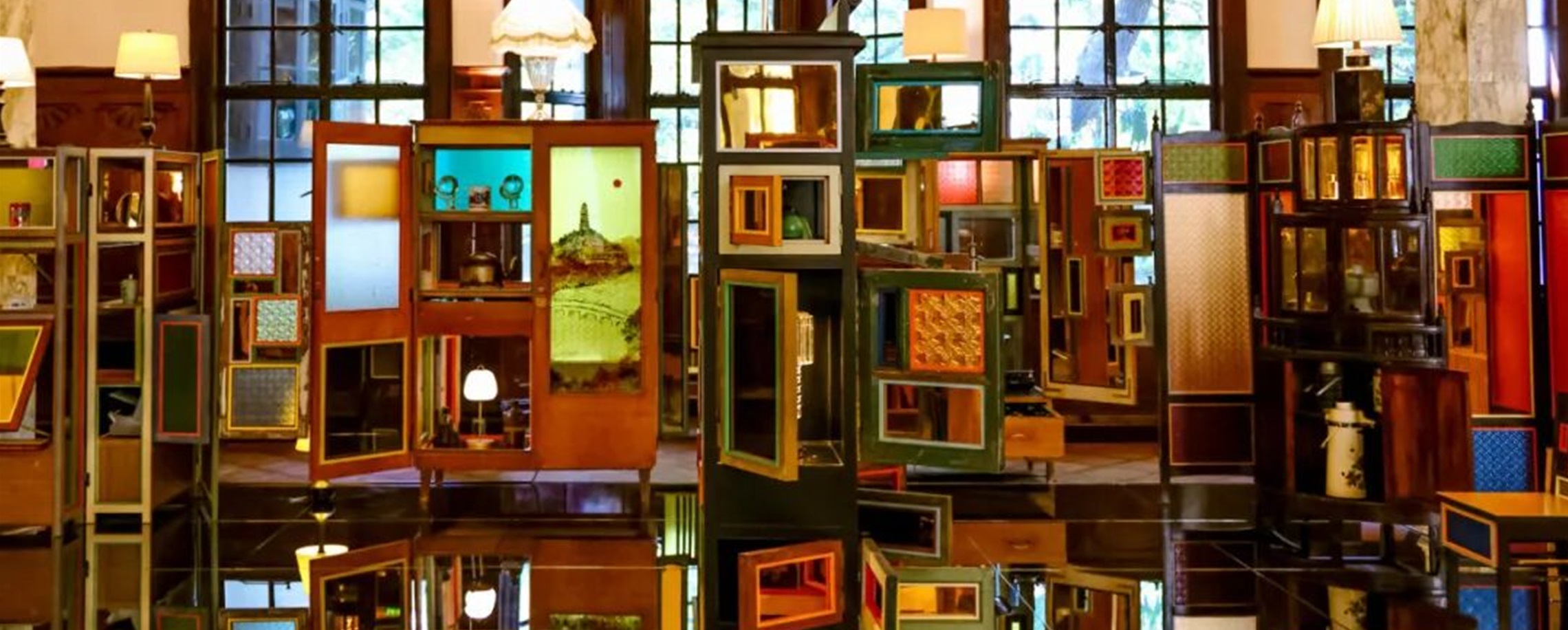
A short walk away, the "Tower" paintings displayed in the Capitol Theater Building showed what happens when Scully abandons that restraint.
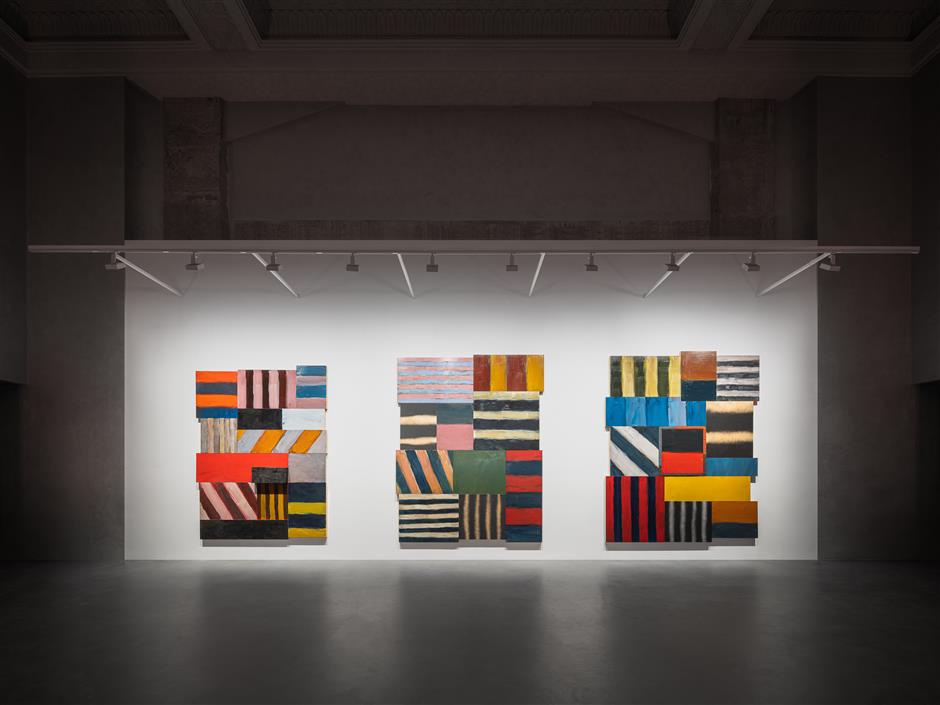
Made from separate panels of wood, felt and aluminum, the large works look less like conventional paintings than structures assembled from fragments. Colors clash. Surfaces jut against one another. Gaps interrupt the composition.
Scully connected the series to his reflections on the September 11 attacks in New York.
He described painting the individual panels separately, scattering them around his studio before assembling them into a single work.
© Sean Scully. Courtesy Lisson. Photography by Alessandro Wang
"Sean Scully: Tower," Capitol Theater Building, Shanghai
"When I put them together, it's a collision," he said.
Unlike the meditative "Landline" paintings, these works embrace disorder. Their uneasy relationships are deliberate, challenging the idea that every element in a painting must fit comfortably with the next.
"With the tower paintings, wrong is just as good as right," Scully said.
He believes harmony can become tiring, even predictable. Occasionally, he argued, an artist must deliberately undermine the very skills that make a beautiful painting possible.
"Art has to dare to be ugly," he said. "Because then what's ugly now is not ugly in the future."
It is a striking declaration from a painter who knows perfectly well how to make colors sing together.
For Scully, the challenge is not always to produce something beautiful but to resist knowing too much about the outcome.
"Sometimes I have to make something that I don't understand," he said, "and I have to be happy not understanding it."
Date: Through January 30, 2027
Opening Hours: 11am-6pm, Tuesday-Saturday
Address: 2/F, 27 Huqiu Road
Admission: Free


















 2026-11-18