


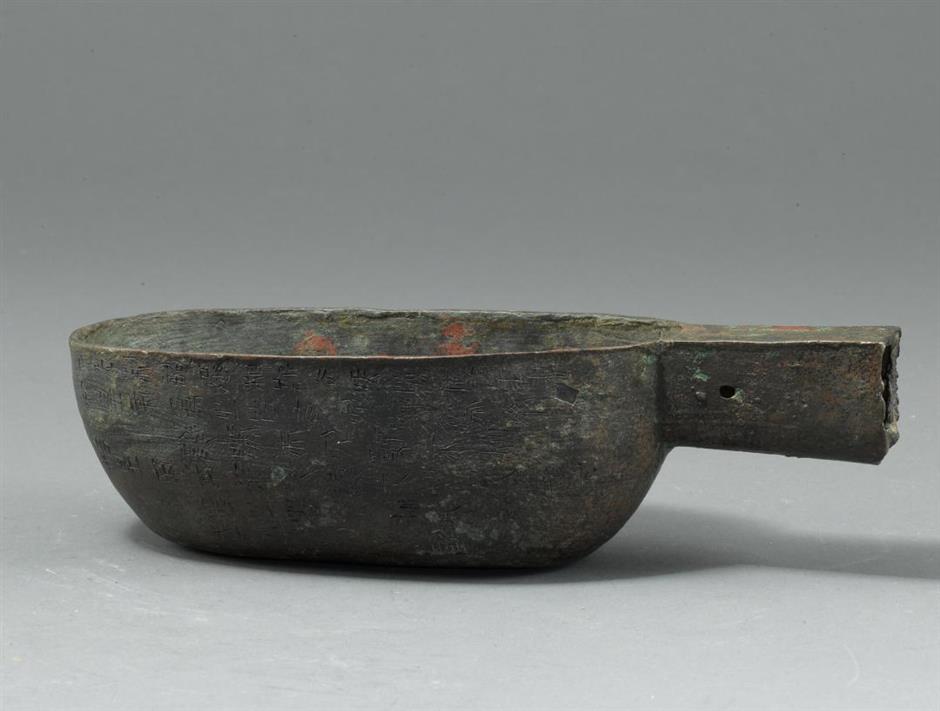





The oval sheng (a measuring vessel) is from the Qin Dynasty (221-206 BC).
"Advancing with the Times: The Technique of Rubbing" is displayed at the Shanghai Museum through August 8.
The exhibition introduces visitors to the ancient Chinese rubbing technique with well-preserved antique bronze and stone artifacts, plus rubbings of them.
As a vital documentary medium in Chinese history, bronze and stone artifacts started to record important information before the Qin Dynasty (221-206BC).
"In order to preserve, study and spread the information on these artifacts, the ancient Chinese, with their wisdom and skillfulness, developed a simple yet productive technique for duplicating the information – rubbing," said Chu Xiaobo, director of the Shanghai Museum.
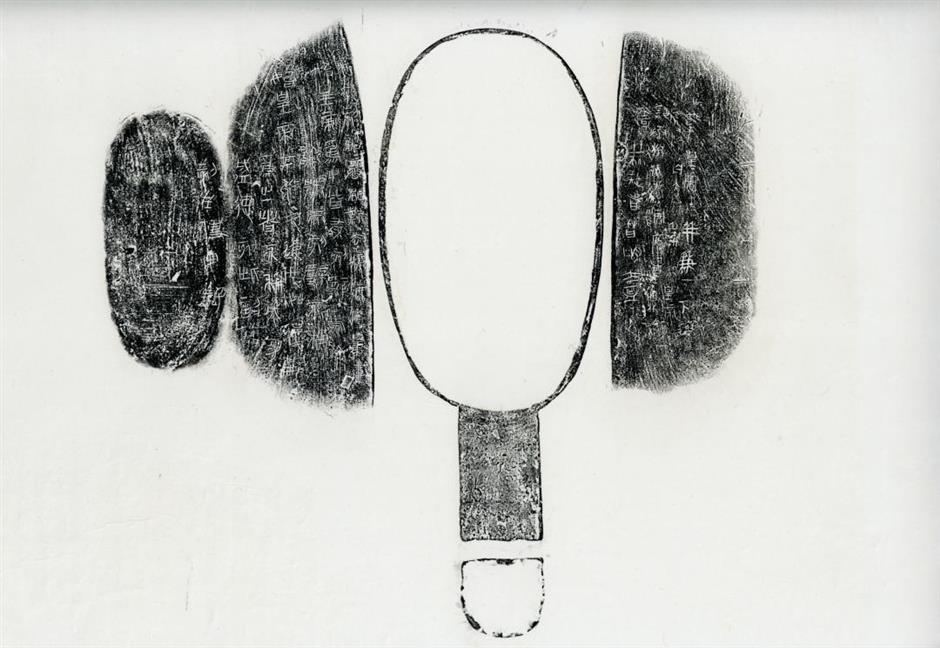
According to Chu, a craftsman first overlays a bronze or stone artifact with paper and then employs the skills of ink-rubbing to precisely copy onto the paper the features of the artifact, including the shape, patterns and inscription. The objects suitable for rubbing range from cliff-carved statues to oracle bones and seals.
Most of the exhibits are from the collection of the Shanghai Museum. Some rubbings are displayed with their corresponding artifacts.
One of the highlights of the exhibition is a rubbing of the 3,000-year-old rectangular ding (cooking vessel 鼎) with the inscription "Si Mu Wu" (司母戊), the largest and heaviest bronzeware ever unearthed in China.
Apart from the cultural relics displayed at the exhibition, visitors can also see some of the main rubbing tools and watch videos that show the rubbing process.
A rubbing taken from the oval sheng
Exhibit info:
Date: Through August 8 (closed on Mondays), 9am-5pm
Address: 201 People's Ave
人民大道201号
Source: City News Service