When it comes to the history of Chinese navigation, Zheng He's voyages cannot be ignored. On July 11, 1405, the great Chinese navigator Zheng He set sail on his first voyage to the western seas, marking a remarkable feat in Chinese maritime history and a glorious page in world maritime history. Led by Zheng He, the fleet aimed to spread friendship and achieve peace through trade and cultural exchanges, promoting friendly relations between different countries.
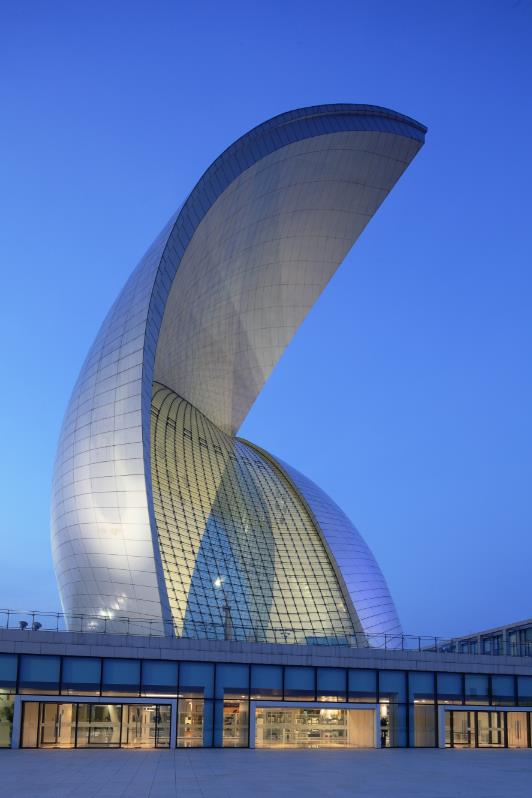
On the occasion of the 600th anniversary of Zheng He's voyages in 2005, with the approval of the State Council, the National Ministry of Transport and the Shanghai Municipal People's Government jointly built the China Maritime Museum, which opened on July 5, 2010. As the largest and highest-ranked thematic maritime museum in China, the China Maritime Museum functions include artifact collection, academic research, exhibition display, and popular science education. The overall exhibition is centered around "navigation" and based on "museum," with six main galleries dedicated to maritime history, ships, harbors and ports, maritime affairs and safety, sailors, and military navigation. There are also special exhibition areas for marine exploration and maritime sports and leisure, as well as an astronomical observatory, a 4D cinema, and a children's activity center.
In the Maritime History Gallery, the development of Chinese navigation over thousands of years is showcased through sections such as "evolution of ships," "ancient shipwrecks and artifacts," "Zheng He's voyages," "exported artworks," "China Merchants Steam Navigation Company," "Battle of Jiawu," and "modern Chinese shipping." In the Ocean Hall, marine biodiversity is displayed through exhibits such as marine biological specimens, providing popular science knowledge about the ocean. In the Sailor Gallery, visitors can enter a navigation simulator, experience the virtual ship's cockpit, and challenge the winds and waves of the Huangpu River, as well as the feeling of dizziness...
With their diverse themes, the six main galleries not only spread maritime culture and popularize maritime knowledge but also provide endless entertainment for visitors.



















 2026-05-28