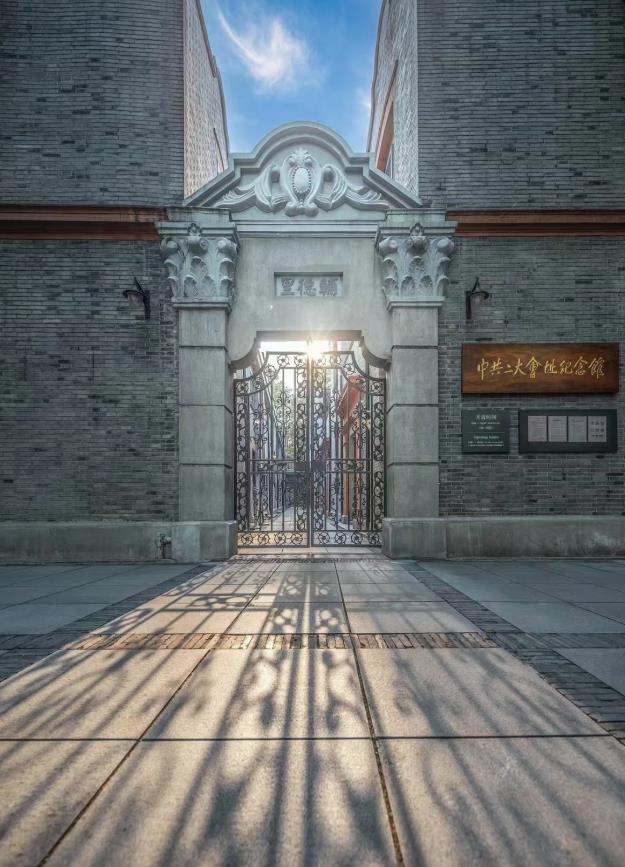
The Memorial of the Site of the Second National Congress of the Communist Party of China is located in a Shikumen building on North Old Chengdu Road, Jing'an District, Shanghai. This was once the residence of Li Da, the person in charge of the Party's Central Bureau of Propaganda, and the location of the first underground secret publishing institution of the Communist Party of China - the People's Publishing House. As a witness to the important historical process of the Communist Party of China, the Memorial Hall has become an important window for domestic and foreign tourists to understand the early history of the Communist Party of China, with its profound historical accumulation and carefully designed exhibitions. It also constantly reminds future generations to remember the great spirit of revolutionary predecessors and inherit their resilient will for the future of China.
From July 16 to 23, 1922, the First Meeting of the First Session of the Second National Congress of the Communist Party of China was held here, with 12 delegates representing the Communist Party among the 195 party members nationwide. The Second National Congress of the Communist Party of China explicitly put forward a comprehensive program for the democratic revolution against imperialism and feudalism, which pointed out the direction for the revolutionary struggle of the people of all ethnic groups in China and has profound historical significance for the Chinese revolution. The Second National Congress played a significant role in the process of party establishment and is an important milestone in the history of the Communist Party of China, along with the First National Congress, in completing the task of party establishment.
Today, the meeting room of the memorial hall is furnished with one table and twelve chairs, vividly reproducing the scene of the meeting. Upon entering the hall, a lifelike theme sculpture appears, with four figures representing workers, farmers, youth, and women, symbolizing the vigorous development of the workers, farmers, youth, and women's movements under the guidance of the "Democratic Revolution Program" flag born at the Second National Congress. The basic exhibition covers three parts: "Creation and Exploration," "Flags and Paths," and "Practice and Development," showcasing the struggles of the virtuous individuals for the Communist Party of China.


















 2026-05-28