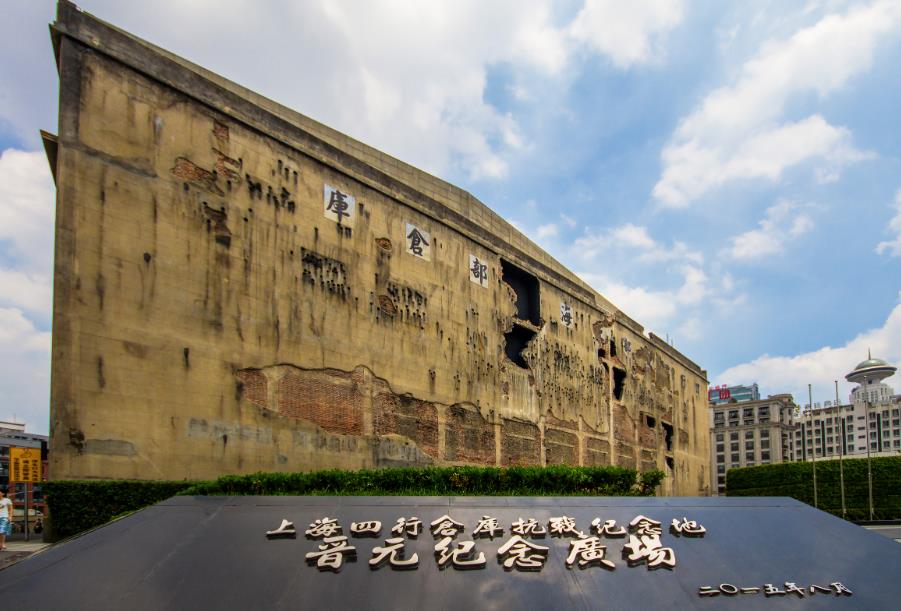
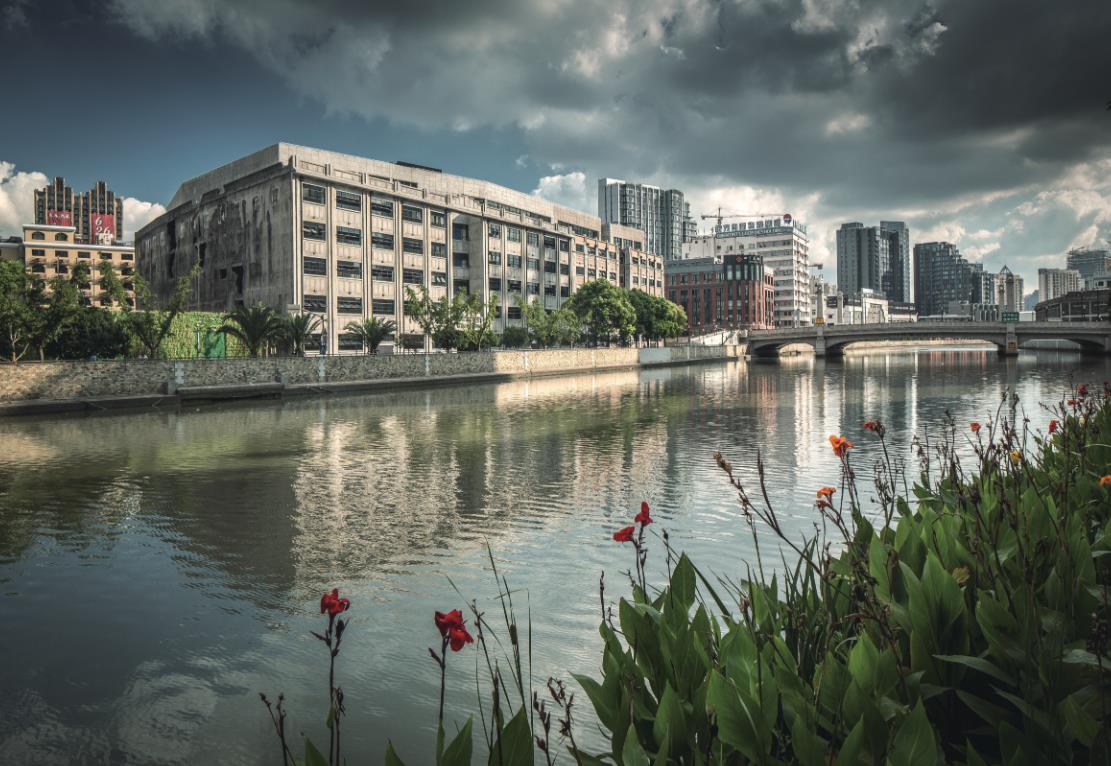
The Sihang Warehouse Memorial Museum is located at No.1 Guangfu Road, on the north bank of Suzhou River. It was built in the early 1930s with joint investment from four banks in China's financial sector, namely Yan Ye, Jincheng, Zhongnan, and Dalian. The Sihang Warehouse Memorial Museum is a five-story reinforced concrete structure, consisting of the Continental Bank Warehouse on the east side and the Joint Trust Warehouse on the west side. It was the largest and most structurally solid warehouse building on the north bank of Suzhou River at that time. In 1937, the "Battle to Defend the Sihang Warehouse," a significant event during the August 13th Shanghai Battle of the War of Resistance Against Japan, took place here. In August 1985, the Sihang Warehouse was declared a cultural heritage site (a memorial site for the War of Resistance Against Japan) by the Shanghai Municipal Government. In April 2014, it was re-designated as a cultural heritage site by the Shanghai Municipal Government.
The Shanghai Sihang Warehouse Memorial Hall is located in the western part of the former Sihang Warehouse (the Shanghai branch of the Joint Trust Warehouse) and was officially established on August 13, 2015.
The Sihang Warehouse Memorial Hall primarily showcases the famous "Battle to Defend the Sihang Warehouse" and, based on the concept of "respecting history and reflecting reality," displays the heroic deeds of the more than 420 soldiers and officers (known as the "Eight Hundred Heroes") from the 1st Battalion of the 524th Regiment of the 262nd Brigade of the 88th Division of the Chinese army who bravely defended the Sihang Warehouse during the later stages of the August 13th Shanghai Battle of the War of Resistance Against Japan, under the banner of the Anti-Japanese National United Front and in the context of the comprehensive war against Japan.
The exhibits in the Shanghai Sihang Warehouse Memorial Hall are divided into four parts: "Bloody Battle in Songhu," "Defending the Sihang Warehouse," "Solitary Resistance," and "Immortal Monument." They emphasize the three attributes of "site, battle, and memorial." In addition to conventional forms such as layouts and physical objects, the exhibition design also incorporates combat scenes, sand table models, dioramas, oil painting sculptures, interactive games, and films to provide visitors with a new and immersive experience.
During the construction of the Shanghai Sihang Warehouse Memorial Hall, in accordance with the requirement of "respecting history and fully, faithfully, and accurately reproducing the wartime situation," the museum also compared historical archives, materials, and photographs to authentically restore the eight bullet holes and more than 420 bullet marks on the western wall of the Sihang Warehouse. Facing the scarred yet still standing western wall of the Sihang Warehouse, the spirit of fearless heroism and unwavering resistance of the war of resistance against Japan continues to inspire every visitor's soul.



















 2026-05-28