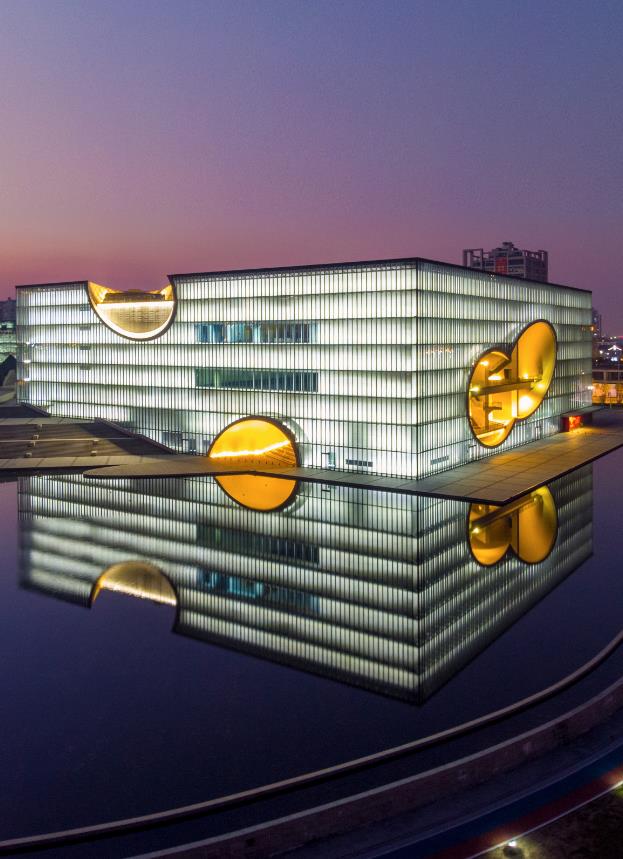
The Shanghai Poly Grand Theater is located on the banks of Yuanxiang Lake in Jiading New Town. It was designed by the internationally renowned Japanese architect, Tadao Ando. This theater is Ando's first large-scale cultural facility design in China. Ando is known for his devotion to pure geometric forms, and the main building of the theater adopts a cylindrical architectural form. The seemingly simple cylindrical shapes create fascinating changes and connections, forming the entrance hall and audience rest area.
The theater consists of a 1,466-seat grand theater and a 400-seat small theater. The semi-outdoor theater stage extends directly to the lake, blending geometric space with natural elements, creating rich layers of light and shadow. The "Stairway to Heaven" observation escalator offers a breathtaking view of the horizon's enchanting sunset, making it a perfect spot for stunning photographs.
With excellent supporting facilities and advanced stage technology equipment, the theater is capable of hosting top-performing arts groups from around the world, making it one of the central venues for performances in Jiading. The theater also actively supports the development of local arts, regularly hosting performances of local operas, traditional culture, and modern art, showcasing the unique cultural heritage of Jiading. This focus on local arts not only enhances the reputation of local culture but also provides the audience with a deeper cultural experience.
The theater regularly organizes art lectures, workshops, and exhibitions, inviting renowned artists to interact with the audience and share their creative processes and artistic concepts. These activities not only enrich the audience's artistic perspectives but also provide artists with opportunities to directly communicate with the audience, enhancing the social engagement of art. Additionally, the theater collaborates with multiple universities and art institutions to carry out art education programs, aiming to cultivate the younger generation's love for cultural arts. These educational activities not only enhance the public's artistic literacy but also inject fresh blood into the future development of art.



















 2026-05-28