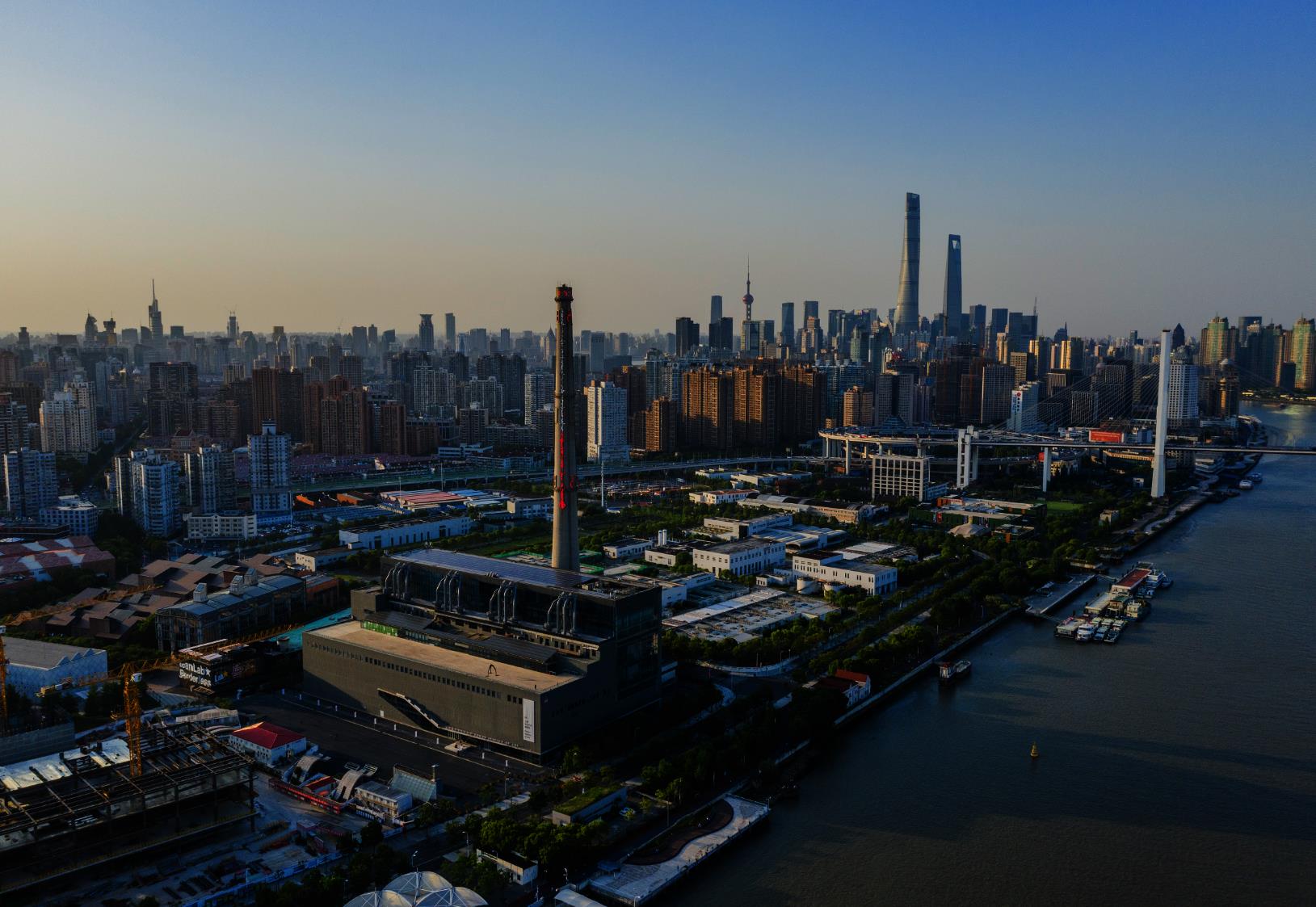
Shanghai Power Station of Art (PSA) is the first state-owned contemporary art museum in mainland China and the main venue for the Shanghai Biennale. Established on October 1, 2012, PSA was transformed from the former Nanshi Power Plant and was once the "Urban Future Pavilion" during the 2010 Shanghai World Expo. It has witnessed the urban transformation of Shanghai from the industrial age to the information age, and its rugged and unrestrained industrial architectural style provides abundant imagination and creative possibilities for artists.
The giant chimney of the original power plant, reaching a height of 165 meters, stands on the bank of the Huangpu River. It used to be a city landmark in Shanghai and has now become an independent exhibition space. The interior of the chimney is a tapering cone, with escalators spiraling upwards. The light at the top appears to extend infinitely towards the top through a contracting perspective relationship. The exterior features rusty stairs and corridors with bold lines, forming a maze-like connection between different floors of the museum. Three intertwined bridges form different letter combinations, which is particularly interesting. The PSA terrace, with a 180-degree view of the river, has always been a favorite spot for visitors to take photos and interact.
In 2014, PSA established the "Young Curators Program," the first state-owned contemporary art institution supporting Chinese and foreign citizen of Chinese origin emerging curatorial talents globally. It is committed to helping curators realize their curatorial concepts in real spaces and make the talents of more young Chinese artists visible.
In the past decade, among the nearly 130 domestic and international exhibitions held by the Shanghai Power Station of Art, 80% were the first public exhibitions of artists within mainland China, presenting the works of over 1,600 artists/artist groups from more than 50 countries. The museum has also engaged in exchanges and collaborations with nearly 60 institutions on exhibitions and public education projects. As a "production workshop" of the new urban culture, constantly self-renewing and always in the present, it is the source of life for this museum.


















 2026-05-28