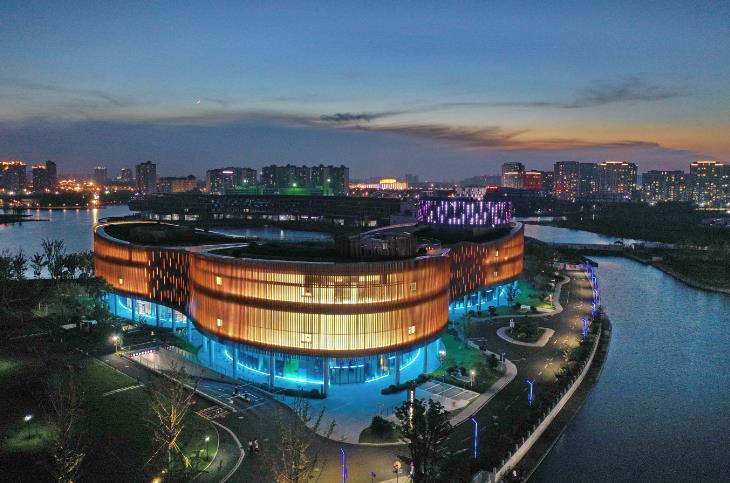
Fengxian Museum is located by the Jinhai Lake, and the overall architecture was designed by the Japanese young architect, Sosuke Fujimoto. In terms of its structure, it consists of three interconnected yet relatively independent units. The exterior facade combines copper grille and glass curtain walls, allowing a seamless transition between the interior and exterior of the building. This design integrates the natural advantages formed by the abundant green water system of the Shanghai with the artistic conception of the traditional Chinese culture's "big pearls falling on a jade plate," creating a unique and appealing exhibition space.
The museum has two permanent exhibition halls: the Fengxian Historical Exhibition Hall and the Haitang Cultural Hall, which recreate the millennia-old civilization of this land. From pottery in the Neolithic Age to bronze wares in the Han Dynasty, you can catch a glimpse of the living scenes of the ancestors: primitive rice cultivation, fishing tools, sacrificial vessels, etc. These cultural relics are a testament to the ancient heritage of Fengxian as the hinterland of Jiangnan. The exhibition also showcases some artifacts related to the construction of seawalls and salt production, demonstrating how the people of Fengxian coexist with nature. In ancient China, the eastern coastal areas were often plagued by typhoons and tidal waves, and the locals gradually developed a tradition of relying on seawalls to sustain their livelihoods from the sea. These exhibits not only bear witness to the history of Fengxian but also provoke deep reflections on the interaction between humans and the natural environment.
One of the highlights of the museum is its display of Fengxian's traditional folk customs and handicrafts. You will discover exhibits closely related to life in Jiangnan: straw weaving, bamboo weaving, and handmade cloth. These crafts were once part of every household's daily life but have gradually faded from people's view in the wave of mechanized production. Some exhibition halls specifically introduce Fengxian's local dialect, allowing visitors to understand this language, which has the most vowels in the world, through wall-to-wall dialect slang vocabulary and interactive games.



















 2026-05-28