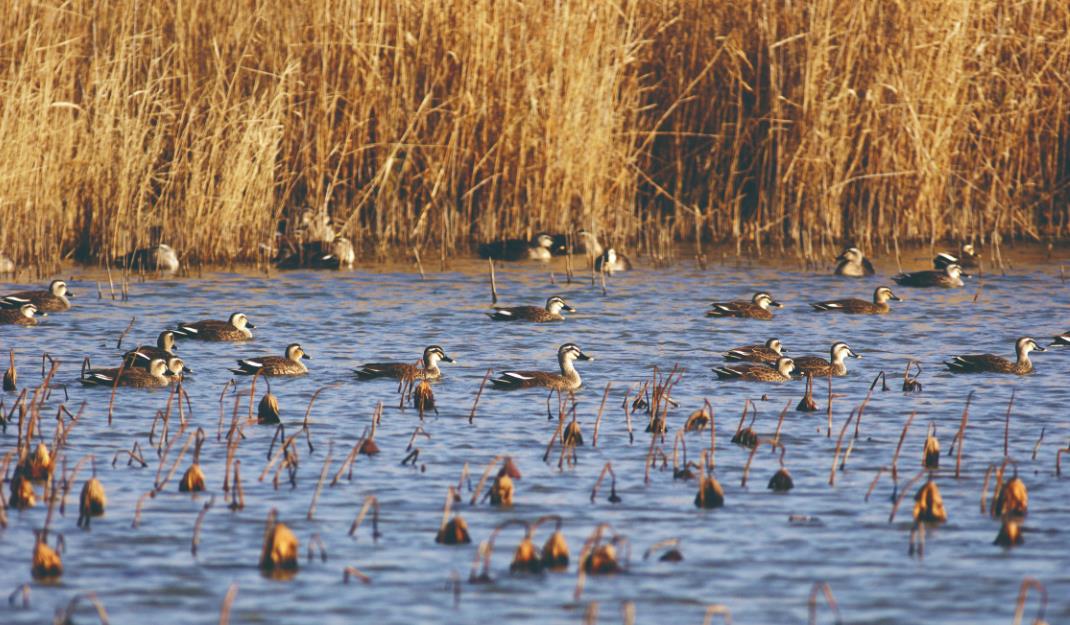
Located at the eastern end of Chongming Island in Shanghai, Dongtan Wetland Park is an important ecological barrier at the mouth of the Yangtze River. It is known as a "paradise for migratory birds" and offers a rare glimpse of pristine natural landscapes in Shanghai. Every year, thousands of bird flock to this wetland for habitation and migration, providing visitors with excellent opportunities for close contact with nature.
The unique charm of Dongtan Wetland comes from the tides and the wetlands. Formed gradually by the deposition of sediments from the Yangtze River, this wetland boasts extensive mudflats, reed marshes, and water channels, teeming with vitality. The vegetation here provides an ideal habitat for birds, while the ebb and flow of tides constantly inject vitality into the wetland, shaping rich biodiversity.
Today, Dongtan Wetland Park is not only an ecological oasis but also represents Shanghai's pursuit of green development and a sustainable future. Through wetland restoration and migratory bird conservation efforts, the local ecological environment has significantly improved. Here, you can stroll through the wetlands, watch birds freely soar, engage in birdwatching or stargazing, participate in water activities, learn about wetland farming, or join wetland study tours. You will discover that the wonders of nature throughout the seasons have never been so accessible.
The park features multiple eco boardwalks, allowing visitors to take a leisurely walk along winding paths and admire the beauty of waterbirds and wetland plants up close. For those who enjoy cycling, the park also offers a cycling path around the wetland, allowing you to feel the vastness of the land while enjoying the gentle breeze.
The Ecological Center in the wetland park provides visitors with an opportunity to learn about the wetland ecosystem. It showcases wetland plants, bird migration routes, and the achievements of ecological conservation projects. If you're looking for a more immersive experience, consider participating in night tours during spring and autumn, observing the activities of nocturnal creatures and experiencing the wetland's different vitality in the darkness.



















 2026-05-28