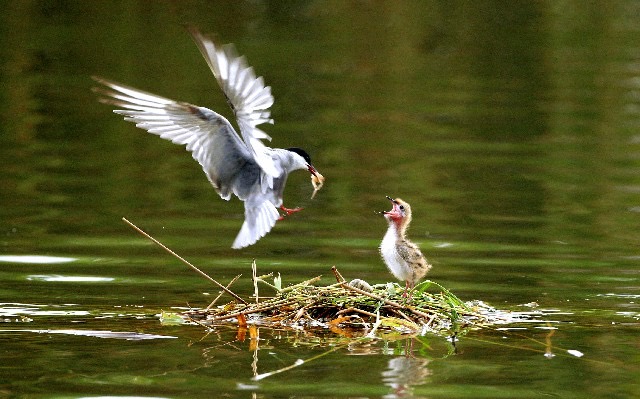
At the 46th session of the UNESCO World Heritage Committee in July 2024, the Migratory Bird Sanctuaries along the Coast of the Yellow Sea-Bohai Gulf of China (Phase II) was officially approved. This signifies the successful elevation of the Shanghai Chongming Dongtan Bird National Nature Reserve (hereinafter referred to as "Dongtan Reserve"), an important component of the Yellow Sea-Bohai Gulf Avian Habitat, as Shanghai's first natural heritage site, achieving a breakthrough of "zero" in Shanghai's World Heritage.
Located at the eastern end of Chongming Island, the third-largest island in China, Dongtan Reserve is situated on the southern edge of the Yellow Sea ecological zone. It is the most well-preserved area for estuarine wetland ecosystems and habitats for rare wildlife, as well as one of the most representative wetlands in the southeastern coastal region of China. The wetland ecosystem here consists of tidal flats, salt marshes, rivers, and reservoirs, forming a complex ecological chain.
It serves as an intermediate node in the East Asian-Australasian Flyway (EAAF). The East Asian-Australasian Flyway spans Northeast Asia and Australia, and most migratory birds cannot complete such a long-distance migration without stopping and foraging along the way. The reserve has recorded over 300 bird species, including 22 globally threatened species, 19 species under first-class national protection, and 59 species under second-class national protection. The abundant biodiversity of Chongming Dongtan also holds significant ecological value globally.
During the autumn and winter seasons, flocks of migratory birds, including black-headed gulls, red-crowned cranes, and egrets, arrive at the Dongtan wetland. They find shelter and food here, creating the most vibrant scenery in the wetland. Countless birds soar in the air, resembling an elegant dance. The reserve utilizes science popularization venues to conduct various activities such as promotion, education, science popularization, and nature experiences. It also develops nature education courses and various science popularization materials, playing an important role in enhancing the scientific understanding of nature conservation, wetland protection, and migratory species conservation, as well as cultivating the ecological civilization consciousness of the public.



















 2026-05-28